What Is D-ID and Why It Matters in 2026
D-ID started as a deepfake protection company — the name literally stands for "De-Identification" — but pivoted hard into AI avatar video generation and has become one of the most recognizable platforms in the space. In 2026, after winning a CES Innovation Award and acquiring explainer video company simpleshow, D-ID has repositioned itself around a single compelling angle: real-time conversational AI agents, not just pre-rendered talking-head videos.
That pivot matters because the AI video market is no longer a novelty. Online videos now account for over 82% of all consumer internet traffic, and 93% of marketers report that video delivers a positive ROI. The question is no longer "should we use AI video?" — it's "which platform fits our specific workflow?" This guide breaks down exactly what D-ID offers, where it excels, where it falls short, and how it stacks up against alternatives like HeyGen and Synthesia.
D-ID Core Features Breakdown
AI Agents 2.0: The Flagship Differentiator
D-ID's most unique feature heading into 2026 is AI Agents 2.0 — interactive, real-time conversational avatars that respond to user input rather than playing back pre-rendered clips. This is a fundamentally different use case than standard AI video generation. Instead of producing a finished video file, you deploy an agent that conducts live conversations via a photorealistic avatar.
Practical applications include:
- Customer service automation on websites and apps — the avatar answers FAQs in real time
- Interactive onboarding flows where users ask questions and receive instant spoken responses
- Sales qualification bots that use a branded human face instead of a chat bubble
- Microsoft Teams integration for enterprise HR and internal helpdesk bots
No competitor in this price range offers a production-ready conversational avatar agent with this level of accessibility. This is D-ID's clearest competitive moat.
Creative Reality Studio: Standard Video Generation
Alongside the agent product, D-ID's core studio lets users generate talking-head videos by uploading a photo or choosing from a library of pre-built avatars, entering a script, and selecting a voice. Output is a lip-synced video in minutes. Key capabilities include:
- 120+ languages supported across text-to-speech and voice cloning
- Video Translate feature covering 29+ languages for dubbing existing footage
- API access for programmatic video generation at scale
- Presenter cloning from a single uploaded image (no hours of footage required)
simpleshow Integration: Explainer Video Layer
The simpleshow acquisition adds a whiteboard-style explainer video engine to D-ID's toolkit. Users can produce animated explainer content with automatic script-to-scene conversion — a format previously requiring expensive agencies or separate subscriptions to tools like Vyond. This gives D-ID a meaningful edge over pure talking-head competitors when the content goal is concept explanation rather than spokesperson-style delivery.
Video Translate
Video Translate is one of D-ID's most practical features for global teams. Upload a video in English, select a target language from 29+ options, and D-ID re-lips the original speaker's face to match the translated audio. The result is a localized video without re-recording. For marketing teams managing multilingual campaigns, this alone can justify the subscription cost. Compare this to HeyGen, which covers 175+ languages but at a significantly higher monthly price point.
D-ID Pricing: What You Actually Get at Each Tier
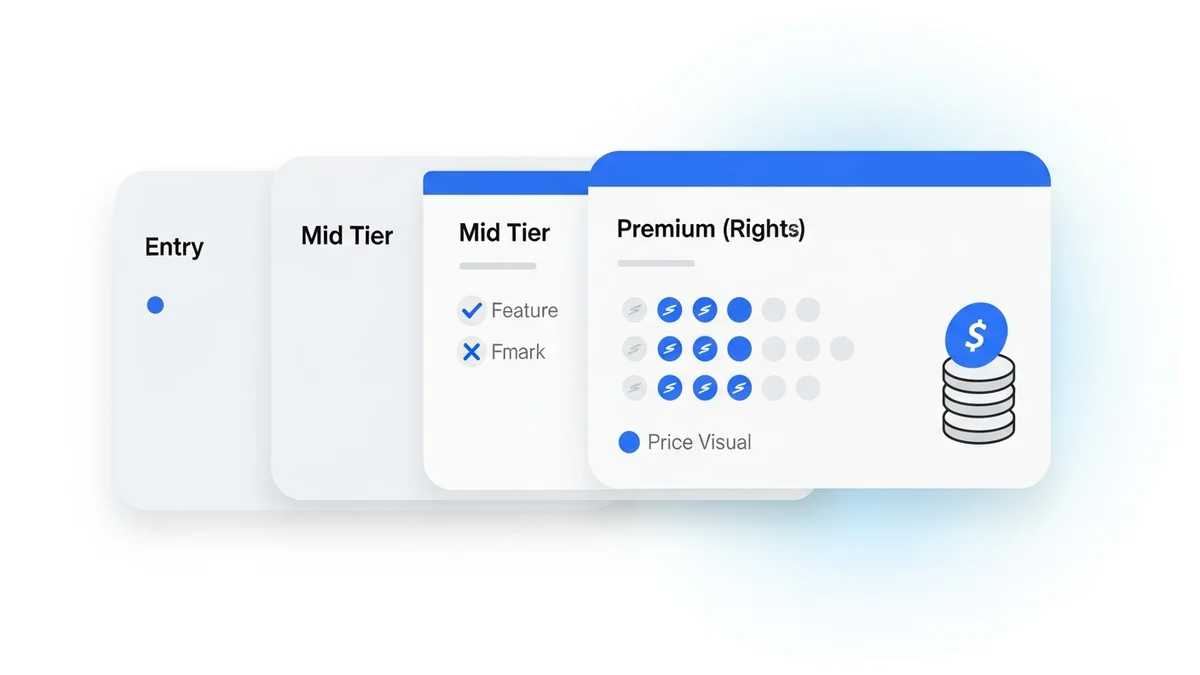
| Plan | Monthly Price | Key Inclusions | Best For |
|---|---|---|---|
| Lite | $5.99/month | Limited video minutes, basic avatars, watermarked output on some formats | Testing the platform, individual creators on tight budgets |
| Pro | $49.99/month | Higher video minutes, API access, Video Translate, custom avatars | Freelancers, small marketing teams, content agencies |
| Advanced | $299.99/month | High-volume video generation, priority rendering, AI Agents access | Mid-size businesses with regular video production needs |
| Enterprise | Custom (typically $800+/month) | Dedicated support, SSO, SLA, Microsoft Teams integration, full API | Large organizations, customer service automation at scale |
Newsletter
Get the latest SaaS reviews in your inbox
By subscribing, you agree to receive email updates. Unsubscribe any time. Privacy policy.
The Lite tier at $5.99/month is genuinely the lowest entry point among serious AI avatar platforms — making D-ID accessible to solo creators testing the format before committing to a larger budget. The jump to Pro at $49.99 is steep relative to Lite, but unlocks the features that make D-ID practical for professional use.
D-ID vs. Competitors: Honest Comparison
D-ID vs. HeyGen
HeyGen has emerged as the dominant pure video-creation platform, reaching $95M ARR and earning recognition as G2's fastest-growing product. Its Avatar IV system delivers micro-expressions and emotional intelligence that D-ID's avatars currently can't match. HeyGen also offers unlimited video generation on all paid plans and supports 175+ languages versus D-ID's 120+.
Where D-ID wins: AI Agents 2.0 for real-time conversation, a significantly cheaper entry tier ($5.99 vs. HeyGen's $29/month Creator plan), and the Video Translate feature covering 29+ languages at the Pro level. If your use case is interactive customer-facing agents, D-ID is the better fit. If your use case is high-volume polished video creation, HeyGen wins on avatar quality and output flexibility.
D-ID vs. Synthesia
Synthesia targets corporate L&D and training video production with a library of 230+ pre-built avatars and strong SCORM export for LMS platforms. D-ID's avatar library is smaller, and it lacks native SCORM export — a meaningful gap for enterprise learning and development teams. However, D-ID's conversational agent capability is something Synthesia doesn't offer, making D-ID more suitable for customer-facing interactive deployments.
| Feature | D-ID | HeyGen | Synthesia |
|---|---|---|---|
| Entry Price | $5.99/month | $29/month | $22/month |
| Real-time Conversational Agents | Yes (AI Agents 2.0) | Yes (LiveAvatar) | No |
| Languages | 120+ | 175+ | 140+ |
| Video Translation | 29+ languages | Yes | Limited |
| Pre-built Avatars | Limited library | Large library | 230+ |
| SCORM Export | No | No | Yes |
| Explainer Video Engine | Yes (simpleshow) | No | No |
| Microsoft Teams Integration | Yes | No | No |
Who Should Use D-ID: Specific Use Cases
Customer Service and Chatbot Teams
D-ID's AI Agents 2.0 is the strongest justification for choosing the platform in 2026. If your team currently runs text-based chatbots on your website or app and wants to add a human face without hiring video actors for every scenario, D-ID's agent deployment is the most cost-effective path. At the Advanced tier ($299.99/month), you get full agent access with real-time response capability — comparable enterprise solutions from custom development would run significantly higher.
Multilingual Marketing Teams
For brands producing content across multiple regional markets, Video Translate at the Pro tier ($49.99/month) delivers clear ROI. Instead of re-recording spokesperson videos in each language, a single source video can be dubbed and re-lipped in 29+ languages. An agency managing campaigns in five European markets saves hours of production time per campaign cycle.
Small Businesses and Solo Creators
The $5.99/month Lite tier makes D-ID accessible as a first AI avatar tool. For a solo consultant, course creator, or small business owner who needs an occasional talking-head video without hiring on-camera talent, the entry cost is negligible. The limitation is output volume and watermarking on certain formats — upgrade to Pro when the use case demands consistent professional output.
Corporate L&D (With Caveats)
D-ID can work for internal training video production, and the simpleshow explainer engine adds value for conceptual content. However, if SCORM export and LMS integration are requirements, Synthesia remains the better choice. D-ID should be considered for L&D teams whose primary distribution is internal portals or video platforms rather than dedicated LMS systems.
Common Mistakes When Using D-ID
Mistake 1: Choosing D-ID for High-Volume Polished Avatar Videos
D-ID's avatar library is smaller than competitors, and the talking-head output quality — particularly facial micro-expressions — trails HeyGen's Avatar IV system. Teams expecting cinematic avatar realism at the Pro tier will be disappointed. Use D-ID when the interactive agent functionality or low entry price is the primary driver, not when avatar quality is the top priority. For high-production avatar videos, evaluate HeyGen first.
Mistake 2: Ignoring the API for Scalable Workflows
Many users interact with D-ID only through the studio interface and miss the API access available from the Pro tier onward. Teams producing large volumes of personalized videos — sales outreach, event follow-ups, individualized onboarding — can automate generation by passing dynamic variables through the API. A sales team sending 500 personalized video messages per month should never be clicking through a manual UI for each one.
Mistake 3: Underestimating Credit Consumption at Lower Tiers
D-ID's credit-based pricing at the Lite and Pro tiers can create unexpected cost spikes for teams that misjudge their volume. A five-minute training video burns significantly more credits than a 60-second social clip. Plan your monthly video output in minutes before selecting a tier, and account for re-renders and test runs — these consume credits just like final outputs.
Mistake 4: Deploying Agents Without Testing Conversation Flows
AI Agents 2.0 requires more setup than standard video generation. A common mistake is deploying a customer-facing agent with insufficient knowledge base configuration, resulting in the avatar confidently delivering incorrect information. Before any public deployment, run the agent through a full set of expected user questions and map edge-case responses explicitly. Treat it as a chatbot QA process with a face attached.
D-ID in the Broader AI Video Ecosystem
D-ID sits in a specific segment of the AI video market: avatar-based, language-focused, and increasingly agent-oriented. It is not a creative video generator in the style of Runway Gen-4.5 or Google Veo 3.1, which generate cinematic footage from text prompts. D-ID's output is always anchored to a human presenter, whether pre-rendered or live-interactive.
That distinction matters when choosing a stack. A marketing team might use D-ID for spokesperson videos and Video Translate, while simultaneously using a generative video tool like Runway Gen-4.5 for b-roll and cinematic product content. These tools are complementary, not mutually exclusive.
The 2026 AI video landscape is segmenting clearly: real-time interactive agents (D-ID, HeyGen LiveAvatar), high-volume polished avatar creation (HeyGen, Synthesia), and generative creative video (Runway, Google Veo, Sora). D-ID's positioning as the most affordable entry point with the most developed agent platform gives it a defensible niche — particularly for SMBs and customer service automation teams that don't need the full weight of an enterprise video production suite.
Final Verdict: Is D-ID Worth It in 2026?
D-ID is worth it for three specific buyer profiles: teams deploying conversational AI agents on customer-facing surfaces, multilingual marketing teams who need Video Translate without paying HeyGen-level pricing, and budget-conscious individuals or small businesses who need an entry-level avatar video tool at $5.99/month.
It is not the right choice for teams prioritizing avatar realism and micro-expression quality, L&D teams requiring SCORM export, or organizations needing a large pre-built avatar library out of the box. In those cases, HeyGen or Synthesia will deliver better results despite the higher price point.
The CES 2026 Innovation Award and simpleshow acquisition signal that D-ID is investing seriously in product depth. For the right use case, the platform delivers genuine ROI — and at the industry's lowest entry price, the cost of finding out is minimal.