
What Is Descript and Why It Dominates the AI Editing Space in 2026
Descript sits in a category of its own. While most AI video tools focus on generating footage from scratch — tools like Sora 2 or Runway Gen 4.5 — Descript solves a completely different problem: making the editing of recorded content fast, intelligent, and accessible to non-editors. It is an all-in-one editor built around a core insight that video and audio are fundamentally text problems once they have been transcribed.
In 2026, the creator economy has matured to the point where raw volume of content is no longer a competitive advantage on its own. What separates high-performing channels and podcasts from the rest is production quality and publication speed. Descript addresses both simultaneously. Its transcript-based editing model means that cutting a 45-minute interview down to a 12-minute highlight reel takes the same skill as editing a Google Doc — which is to say, almost none at all.
This guide covers every major Descript feature in depth, explains who each feature is designed for, and gives you concrete benchmarks and workflows to act on immediately.
Core Features Explained
Transcript-Based Video and Audio Editing
Descript's flagship capability is its text-based editing engine. When you import a video or audio file, Descript transcribes it automatically. From that point on, every word in the transcript is time-locked to the corresponding frame in the video. Deleting a sentence in the transcript deletes the clip. Rearranging paragraphs rearranges footage. This is not a gimmick — it fundamentally changes the editing workflow for talking-head videos, interviews, podcasts, and tutorials.
The practical result: editors who previously spent four to six hours on a 30-minute episode now routinely complete the same edit in 60 to 90 minutes. The time savings compound across an entire content operation.
Underlord AI Assistant
Underlord is Descript's embedded AI assistant, launched as a standalone capability within the editor. It handles higher-order tasks that would otherwise require manual judgment:
- Filler word removal: Automatically detects and removes "um," "uh," "like," and custom filler phrases across an entire recording in one action.
- Eye contact correction: Uses AI to adjust gaze so speakers appear to be looking directly into the camera, even when they were reading from a teleprompter or looking at notes.
- Studio Sound: One-click background noise elimination and voice quality enhancement — useful for recordings made in less-than-ideal environments.
- AI Actions for repurposing: Converts long-form recordings into blog post drafts, social media clips, chapter summaries, and show notes without manual effort.
- Automatic chapter markers: Analyzes the transcript and suggests chapter breaks with descriptive labels.
Remote Recording (Up to 4K, 10 Guests)
Descript includes a built-in remote recording feature that captures each participant's audio and video locally — not through a compressed stream. This means every guest delivers a clean, high-resolution track regardless of their internet connection quality. The system supports up to 10 simultaneous participants at up to 4K resolution, which puts it on par with dedicated tools like Riverside.fm and Squadcast while eliminating the need for a separate subscription.
Overdub and Voice Cloning
Overdub lets you create a personal voice clone that can read new text in your own voice. The practical application: if you recorded a take and misspoke a product name, a statistic, or a URL, you can fix it by typing the correct text rather than re-recording. On paid plans, Overdub quality is high enough for most production use without detectable artifacts on a careful listen. Note that voice cloning requires you to train the model on your own voice — Descript does not allow cloning another person's voice without their recorded consent.
Screen Recording and Multitrack Editing
Descript includes native screen recording, which makes it particularly useful for software tutorials, product demos, and SaaS onboarding content. Multitrack editing handles complex compositions: separate audio tracks for each speaker, background music, sound effects, and B-roll all maintain independent control within the same timeline. The interface is closer to a simplified version of Adobe Premiere than a basic consumer editor, but without the steep learning curve.
Content Repurposing Workflows
One of Descript's most commercially valuable features is its content repurposing engine. A single long-form recording can be automatically converted into:
- Short-form vertical clips for TikTok, Instagram Reels, and YouTube Shorts
- A blog post draft pulled from the transcript
- Social media captions with timestamps
- A chapter-based show notes document
- A highlight reel with the most engaging segments auto-identified
This single feature can replace three or four separate tools in a creator's stack — clip editors, blog post tools like Pictory, caption generators, and AI writers.
Newsletter
Get the latest SaaS reviews in your inbox
By subscribing, you agree to receive email updates. Unsubscribe any time. Privacy policy.
Descript Pricing: What You Actually Get at Each Tier
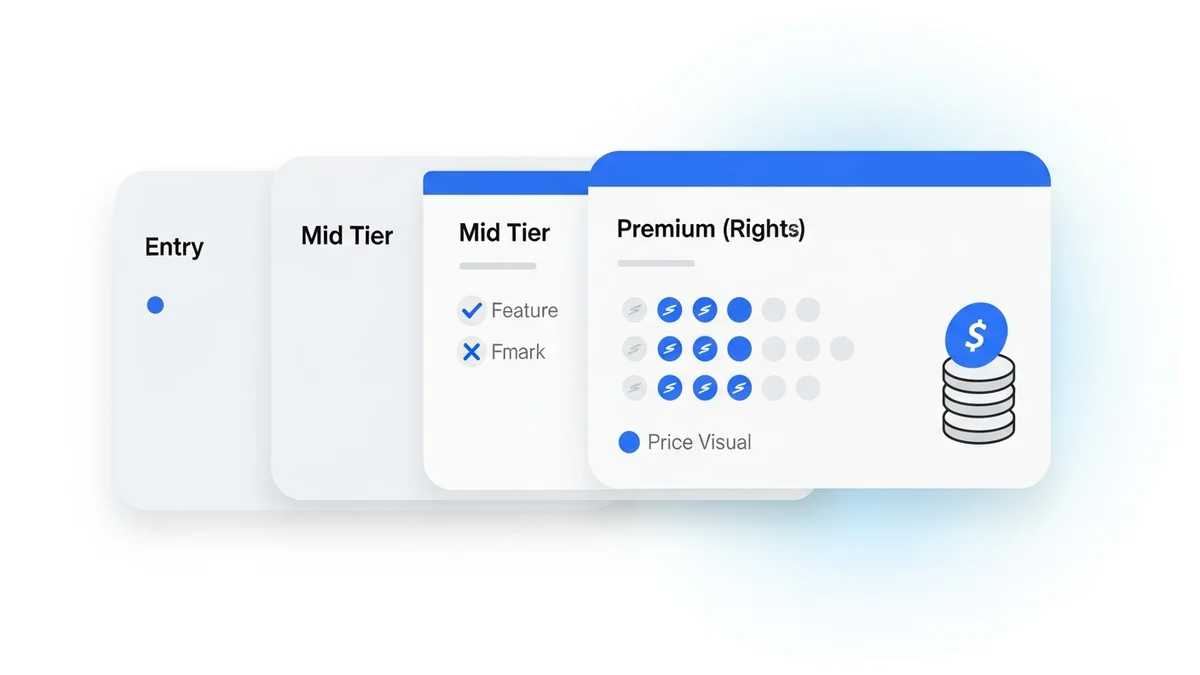
| Plan | Price | Transcription Hours | Key Limits | Best For |
|---|---|---|---|---|
| Free | $0/month | 1 hour | No Overdub, watermark on exports, 720p max | Evaluation only |
| Hobbyist | $12/month (billed annually) | 10 hours | Overdub limited, no 4K export | Solo creators with low volume |
| Creator | $24/month (billed annually) | 30 hours | Full Overdub, 4K export, Underlord access | Active YouTubers and podcasters |
| Business | $40/month per seat (billed annually) | Unlimited | Team collaboration, advanced permissions | Media companies, marketing teams |
| Enterprise | Typically $500+/month for teams | Unlimited | SSO, dedicated support, custom storage | Large organizations |
The Creator plan at $24/month is the realistic entry point for anyone producing content consistently. The jump from Hobbyist to Creator is worth it specifically for unlimited Overdub use and full AI Actions access — without those two features, the tool's competitive advantage is significantly reduced.
Who Should Use Descript (And Who Should Not)
Ideal Use Cases
Podcasters and interview show hosts gain the most from Descript. The combination of remote recording, transcript editing, filler word removal, and automated show notes essentially automates 60-70% of post-production. A two-person weekly podcast team can realistically reduce their total production time from 8 hours per episode to under 3 hours.
YouTubers producing talking-head or tutorial content benefit from the same transcript-editing workflow plus the repurposing engine. One 20-minute tutorial video becomes a blog post, three short clips, and a Twitter thread with minimal additional effort.
Enterprise teams creating internal training videos or product demos get value from the multitrack editor, screen recording, and team collaboration features. The Business plan's unlimited transcription hours makes it practical for high-volume production environments.
Marketing agencies use Descript to turn client interviews and testimonials into polished short-form content at scale. The eye contact correction and Studio Sound features are particularly valuable here — raw client footage recorded on a laptop often arrives with poor audio and awkward framing.
Where Descript Falls Short
Descript is not the right tool for AI video generation. If your workflow involves creating video from text prompts, generating synthetic avatars, or producing footage that does not exist as a recording, you need a different category of tool entirely. HeyGen and Synthesia handle AI avatar video creation. Luma Dream Machine and Kling AI handle text-to-video generation. Descript assumes you already have footage — it edits and enhances it rather than creating it from nothing.
Descript also has limits for users who need frame-precise color grading, complex motion graphics, or multi-camera switching with professional broadcast controls. For those workflows, DaVinci Resolve or Adobe Premiere remain the standard.
Common Mistakes Descript Users Make
Mistake 1: Using the Free Plan for Production Work
The Free plan's 1-hour transcription limit and watermarked exports make it unsuitable for anything you intend to publish. New users frequently sign up on Free, invest time building a project, and then discover the watermark only at export. The fix is straightforward: start on the Hobbyist or Creator plan. The $24/month Creator plan has a 30-day free trial — use that for evaluation, not the perpetual Free tier.
Mistake 2: Ignoring the Repurposing Features
A significant share of Descript users treat it purely as a video editor and never activate Underlord's AI Actions for content repurposing. This leaves the most time-saving features unused. After completing an edit, trigger "Create social clips," "Write blog post from transcript," and "Generate show notes" as a standard step in your export checklist. Each takes under two minutes and replaces tools that typically cost $20-40/month individually.
Mistake 3: Skipping Voice Cloning Training
Overdub requires a training session where you read approximately 10 minutes of sample text. Many users skip this step and then find that the generated voice does not sound like them. The training session is not optional — it is what makes Overdub useful. Budget 20 minutes on your first day to complete it properly.
Mistake 4: Not Using Studio Sound on Every Import
Studio Sound — Descript's one-click audio enhancement — is not applied automatically. Users frequently export content without enabling it and wonder why their audio sounds flat or noisy compared to other creators. Make it a habit: every time you import a recording, apply Studio Sound before you begin any editing. It takes one click and the difference in perceived production quality is significant.
Mistake 5: Treating Transcript Edits as Final Without Review
Descript's transcription accuracy is high — typically 95%+ for clear audio in English — but it is not perfect. Technical jargon, proper nouns, acronyms, and non-English words frequently transcribe incorrectly. Editors who delete transcript segments without reviewing the actual audio sometimes cut content they intended to keep. Always spot-check deletions, especially around technical terminology or speaker names.
Descript vs. Competing AI Video Tools: Where It Fits in Your Stack
The AI video space in 2026 spans several distinct categories, and Descript competes primarily within the editing and post-production segment rather than the generative segment. Understanding the distinction prevents tool overlap and budget waste.
| Tool | Primary Function | Starting Price | Best Combined With Descript? |
|---|---|---|---|
| Descript | Transcript-based editing, repurposing | $24/month | — |
| HeyGen | AI avatar video creation | $29/month | Yes — generate avatar intros, edit in Descript |
| Synthesia | AI avatar for training content | $22/month | Yes — combine synthetic and recorded footage |
| Pictory | Text-to-video from articles | $19/month | Partial — overlapping repurposing features |
| Runway Gen-4.5 | Generative video from prompts | $15/month | Yes — generate B-roll, edit in Descript |
The most powerful combination for creators in 2026 is Descript paired with a generative AI tool. Use Runway Gen 4.5 or Luma Dream Machine to generate custom B-roll footage that would be impossible or expensive to film, then import that footage into Descript alongside your recorded interview or narration. The result is a production that blends real recorded content with AI-generated visuals — edited and finalized entirely within Descript's transcript-based workflow.
Getting Started: A Practical First-Week Workflow
If you are new to Descript, structure your first week around these four milestones to extract value quickly without getting overwhelmed by the full feature set:
- Day 1: Sign up on Creator plan (free trial). Complete Overdub voice training. Apply Studio Sound to one existing recording and compare the audio quality difference.
- Day 2: Import your most recent podcast episode or tutorial recording. Edit it using only transcript deletions — no timeline manipulation. Export and measure time spent versus your previous workflow.
- Day 3: Use Underlord's AI Actions to generate show notes, three social clips, and a blog post draft from the same episode. Assess what needs editing versus what is publish-ready as-is.
- Day 4: Record a new segment using Descript's built-in recorder (or remote recording if you have a guest). Compare the quality and workflow versus your existing recording setup.
- Day 5: Review your full production workflow and identify which external tools Descript can replace. Calculate the monthly cost savings from eliminated subscriptions against Descript's $24/month Creator fee.
Most creators find that Descript pays for itself within the first month by replacing a caption generator, a basic clip editor, and a transcription service — tools that collectively cost $40-80/month when purchased separately. The AI editing time savings on top of that represent the actual competitive advantage.