
What Is Descript and Who Is It Really For?
Descript is an AI-powered video and audio editing platform built around a concept that sounds almost too simple: edit your video by editing the text. Import a recording, let Descript transcribe it at roughly 95% accuracy, then cut, rearrange, or delete content the same way you'd edit a Google Doc. Remove a sentence from the transcript — it disappears from the video. Move a paragraph — the footage follows.
That core mechanic separates Descript from conventional timeline editors like Premiere Pro or DaVinci Resolve, and it separates it from pure AI video generators like Runway Gen 4.5 or Sora 2. Descript does not generate video from scratch — it refines, repurposes, and polishes footage you already have. That distinction matters enormously when choosing the right tool for your workflow.
Best suited for: podcasters, interviewers, educators, marketers producing tutorials, and YouTubers whose content is primarily spoken. If your videos are talking-head interviews, explainers, or podcast recordings, Descript fits like a glove.
Not the right fit for: professional filmmakers, narrative video producers, or anyone needing frame-level color grading, multi-camera switching, or complex motion graphics. For AI-generated video from a prompt, tools like Google Veo 3.1 or Luma Dream Machine are purpose-built for that task.
Descript Pricing Breakdown
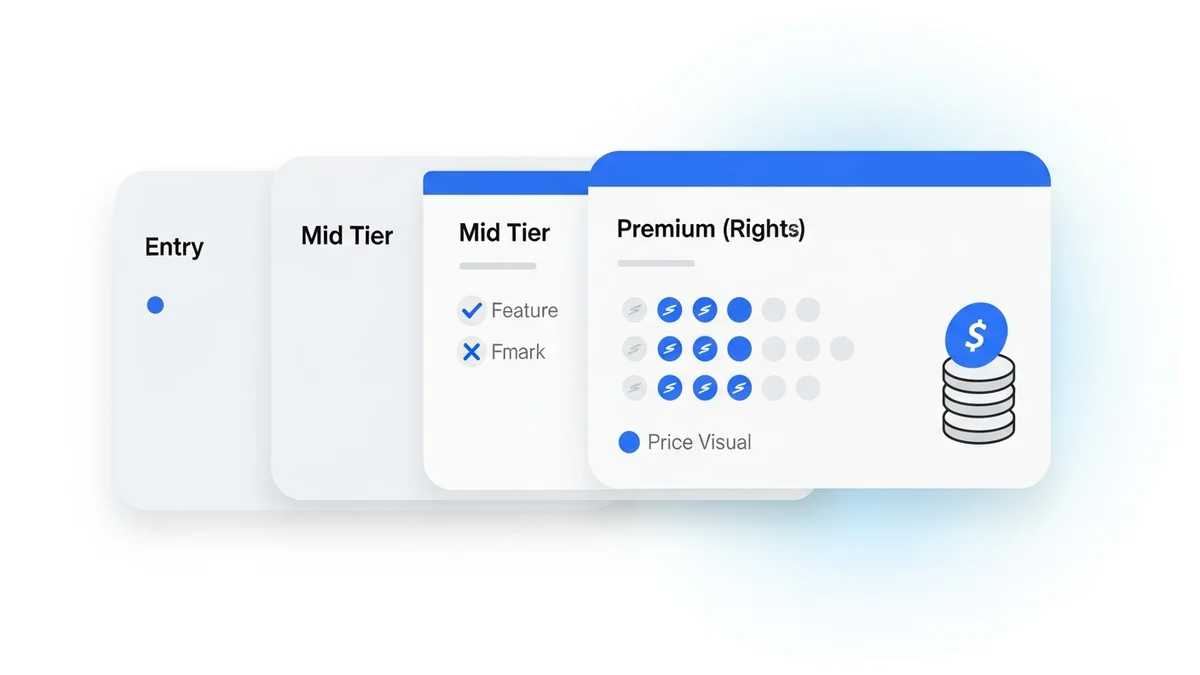
Descript offers a generous free tier and three paid plans. Pricing starts at $24/month and scales with usage and team size. The free plan is genuinely useful for testing the platform — not a crippled demo — which is one of the reasons Descript has built a loyal user base among independent creators.
| Plan | Monthly Price | Best For | Key Limits |
|---|---|---|---|
| Free | $0 | Testing, occasional use | Limited transcription hours, watermarked exports |
| Creator | $24/mo | Solo creators, podcasters | 10 hrs/mo transcription, 1 Overdub voice |
| Pro | $40/mo | Teams, professional workflows | Unlimited transcription, advanced AI features |
| Enterprise | Typically $500+/mo | Large teams, enterprise compliance | Custom seats, SSO, priority support |
The Creator plan at $24/month is where most independent creators land. It unlocks the full text-based editing workflow, automated filler-word removal, and one Overdub voice clone. Pro is worth the step up if you produce more than 10 hours of content per month or need the advanced AI eye contact and green screen features.
Core Features: What Descript Actually Does Well
Text-Based Video Editing
This is Descript's defining feature and its strongest competitive advantage. After transcription, the timeline becomes a document. Highlight "um, so basically" in the transcript and hit delete — the audio and video clip for that phrase disappears automatically. For interview-heavy and educational content creators, this workflow can cut editing time by 50% or more compared to scrubbing a traditional timeline.
Overdub Voice Cloning
Overdub lets you record a voice model of yourself, then type corrections directly into the transcript instead of re-recording. Mispronounced a name? Misstated a statistic? Type the fix, and the AI generates your voice saying it. The quality is convincing enough for spoken corrections within context, though it is not designed to replace full voice-over production.
Studio Sound (AI Audio Enhancement)
Studio Sound analyzes your raw audio and suppresses background noise, room echo, and microphone artifacts in a single click. For creators recording in home offices or less-than-ideal acoustic environments, this is a genuine time-saver. It delivers results comparable to dedicated tools like Adobe Podcast Enhance, without leaving the Descript interface.
Filler Word Removal
Descript can automatically detect and remove filler words — "um," "uh," "like," "you know" — across an entire recording with one action. This is a feature podcasters and interview editors cite as transformative. What previously required hours of manual timeline scrubbing becomes a checkbox operation.
Newsletter
Get the latest SaaS reviews in your inbox
By subscribing, you agree to receive email updates. Unsubscribe any time. Privacy policy.
AI Eye Contact Correction
The eye contact feature digitally adjusts the speaker's gaze to appear as if they're looking directly at the camera, even when they were reading notes or looking off-screen. It is a subtle but effective enhancement for talking-head content where direct eye contact builds viewer trust.
Automated Transcription (95% Accuracy)
Descript's transcription engine achieves approximately 95% accuracy on clear audio with standard accents. This is competitive with standalone transcription tools and sufficiently accurate that most transcripts require only minor cleanup before editing begins. For non-standard accents or poor-quality audio, accuracy drops, but the manual correction tools are straightforward.
Descript Pros and Cons: The Honest Assessment
Pros
- Text-based editing is genuinely revolutionary for spoken content. No other mainstream editor makes interview and podcast editing this fast.
- Generous free tier. The free plan includes real functionality, not just a watermarked preview, making it low-risk to evaluate.
- All-in-one workflow. Transcription, editing, audio enhancement, captions, and publishing live in a single interface — reducing tool-switching overhead.
- Overdub voice cloning reduces re-recording. Fixing spoken errors with typed corrections is a significant quality-of-life improvement for any creator who records lengthy content.
- Filler word removal saves hours. Automated cleanup of "um" and "uh" across a 60-minute recording is a feature podcasters consistently rank as one of Descript's top value drivers.
- Studio Sound quality is competitive. One-click audio enhancement good enough for professional-sounding output without a dedicated audio post-production step.
- Accessible for non-technical users. The document-style interface lowers the barrier for educators and marketers who are not trained video editors.
Cons
- Steep learning curve for the full feature set. The text-based editing concept is intuitive once mastered, but understanding how all features interact — particularly Overdub, compositions, and multi-track audio — takes dedicated time investment.
- Performance issues with large projects. Users report lag and slow processing when working with long recordings (60+ minutes) or high-resolution source files. This is a consistent complaint in user reviews across platforms.
- Not a professional timeline editor. Color grading, multi-camera workflows, and complex motion graphics are absent. Descript is not a replacement for Premiere Pro or DaVinci Resolve for narrative or cinematic work.
- Overdub quality degrades on longer generations. Generating a single corrected word sounds natural; generating a full paragraph of AI voice can sound noticeably synthetic depending on the voice model quality.
- Transcription accuracy drops with poor audio. If source recordings have heavy background noise or strong accents, the 95% accuracy benchmark does not hold, and manual transcript correction becomes time-consuming.
- Export workflow can feel constrained. Advanced export settings and format control are more limited than dedicated editors, which can be a friction point for professional delivery pipelines.
Common Mistakes Creators Make With Descript
Mistake 1: Using It as a Full Video Production Suite
The most common mistake is purchasing Descript expecting it to replace a traditional NLE like Premiere Pro. A filmmaker editing a short documentary with B-roll, color grades, and score will hit the tool's limits within hours. Descript is an editorial and finishing tool for spoken content — it is a complement to production pipelines, not a replacement for them.
Mistake 2: Skipping the Voice Training for Overdub
Overdub requires recording a training script to build your voice model. Users who rush through this or record in a noisy environment end up with a voice clone that sounds robotic or inconsistent. Recording the Overdub training script in the same acoustic environment where you record your actual content is essential for natural-sounding results.
Mistake 3: Ignoring the Free Tier Before Committing
Because Descript's interface is so different from conventional editors, creators who skip the free tier and go straight to a paid plan often feel locked into a tool that does not match their workflow. Spending two to three hours on the free plan before upgrading is the only reliable way to determine fit.
Mistake 4: Working With Uncompressed Source Files
Importing raw, uncompressed video files (particularly 4K or multi-track audio) dramatically increases the processing load and contributes to the lag issues users report. Proxying footage before import — or working with compressed H.264 files — significantly improves real-time performance.
How Descript Compares to Alternatives in the AI Video Space
Descript occupies a specific niche: AI-assisted editing of existing recorded content. It is not a generative AI video tool. Understanding where it sits in the broader landscape helps set accurate expectations.
For AI avatar and text-to-video presentation content, tools like Synthesia, HeyGen, and D-ID are the direct alternatives. These generate video from scripts using digital presenters — Descript requires you to record yourself.
For article-to-video or text-to-video repurposing, Pictory is the closer competitor. Pictory converts written content into video with stock footage, while Descript works with your own recordings. Both serve content repurposing but from entirely different starting points.
| Tool | Starting Price | Core Use Case | Requires Your Recording? |
|---|---|---|---|
| Descript | $24/mo | Edit spoken video/audio via transcript | Yes |
| Synthesia | $22/mo | AI avatar video from script | No |
| HeyGen | $29/mo | AI avatar + video translation | No |
| Pictory | $25/mo | Article/script to video with stock footage | No |
| D-ID | $22/mo | Talking photo / AI presenter | No |
Final Verdict: Is Descript Worth It in 2026?
For its target audience — podcasters, interview-based YouTubers, online educators, and marketing teams producing tutorial content — Descript is one of the most efficient editing tools available at any price point. The text-based editing workflow is not a gimmick. It is a genuinely faster approach to the specific problem of spoken content editing, and the supporting AI features (Studio Sound, filler word removal, Overdub) are polished enough to deliver real production value without technical expertise.
The caveats are real but narrow. If your content is cinematic, narrative, or requires advanced timeline control, Descript is not your tool. If you work with very long recordings or unoptimized source files, plan for performance friction. And if your goal is generating video from a prompt rather than editing what you've recorded, the generative AI space — from Runway Gen 4.5 to Sora 2 — is where you should be looking instead.
For everyone else, the free tier is available with no credit card required. Test it with your actual content before deciding. The workflow either clicks immediately or it does not — and there is no better way to find out than spending an hour editing one of your own recordings inside the platform.
Bottom line: Descript at $24/month is excellent value for spoken content creators who need to edit faster without hiring an editor. It earns a strong recommendation for its intended use case, with eyes open to its limitations.