
What Is Fliki and Why It Matters in 2026
The AI video generation market is exploding. With AI projected to contribute $15.7 trillion to the global economy by 2030, the tools that make video creation accessible to non-editors are becoming essential infrastructure for content creators, marketers, and educators. Fliki sits at the intersection of two high-demand capabilities: text-to-video and text-to-speech — packaged into a browser-based workflow that requires zero video editing experience.
Where tools like Runway Gen 4.5 and Sora 2 target advanced users who want granular control over cinematics and motion, Fliki targets a completely different segment: people who need a finished video fast, built from a script or article, without touching a timeline editor.
This guide breaks down every major Fliki feature, explains who each one is built for, and gives you the honest picture of where Fliki leads — and where it falls short compared to alternatives.
Core Features of Fliki: A Full Breakdown
Text-to-Video Generation
Fliki's flagship capability is its Script-to-Video workflow. You paste a script or article into the editor, and Fliki breaks it into scenes automatically. Each scene gets its own narration clip, background visual (from stock media or AI-generated imagery), and caption layer. The system handles the assembly — you handle the direction.
This is significantly faster than traditional editing. A 3-minute explainer video that might take 4–6 hours to produce manually can be roughed out in under 30 minutes using Fliki's scene-based structure. The tradeoff is creative control: you're working within Fliki's scene logic, not building a custom timeline frame by frame.
In 2025–2026, Fliki added Workflow v4, which introduced smarter scene detection and improved how scripts map to visuals. Combined with the Editor Copilot feature — an AI assistant embedded directly into the editor — users can now prompt the system to rewrite scene text, suggest better visuals, or adjust pacing without leaving the editor window.
AI Voice Generator (Text-to-Speech)
Fliki's voice library is one of its strongest selling points. The platform supports multiple languages and accents, with voices designed to sound natural rather than robotic. The platform has added Studio Voices and Ultra-Realistic Voices as separate tiers, giving users options from standard narration to broadcast-quality delivery.
The Expressive Multilingual Voices update (one of Fliki's most recent feature launches) extended emotional range across languages — meaning the AI voice can convey enthusiasm, calm, or urgency without sounding flat. This is a meaningful improvement over earlier TTS tools that were monotone by default.
Fliki also supports Custom Voices, allowing creators to clone a voice for consistent brand narration. This is particularly valuable for YouTubers and brand teams who want a signature sound without hiring voice actors for every new video.
AI Avatars and Character Consistency
For creators who want a human face on screen without filming themselves, Fliki offers AI Avatars — both standard and full-body options. The Personalized Avatars feature lets you create a digital spokesperson that mirrors your likeness or a custom character.
The most significant recent update here is Character Consistency, which ensures that when you use an AI avatar or AI-generated character across multiple scenes or videos, the visual appearance remains stable. This was a major pain point in earlier AI video tools — characters would subtly shift in appearance between scenes, breaking immersion. Fliki's character consistency feature addresses this directly.
If avatar-driven video is your primary use case, it's worth comparing Fliki directly against HeyGen and Synthesia, both of which specialize in AI presenter videos with more advanced avatar customization options. Fliki's avatars are capable, but HeyGen and Synthesia go deeper on enterprise-grade realism.
AI Image and Video Clip Generation
Fliki has moved beyond stock media dependency. The platform now includes access to multiple AI image models and AI video models, accessible through its Playground & Advanced Models feature. Users can generate original visuals directly inside the editor rather than relying on Getty or Shutterstock clips.
The AI Video Clips 2.0 update improved motion quality in generated clips, reducing the artifacting and unnatural movement that plagued earlier AI video models. This brings Fliki closer to tools like Pika Labs and Luma Dream Machine for short generative clips — though those tools remain more advanced for pure video generation quality.
Newsletter
Get the latest SaaS reviews in your inbox
By subscribing, you agree to receive email updates. Unsubscribe any time. Privacy policy.
Bulk Create and Automation
One feature that sets Fliki apart from most competitors is Bulk Create. This allows users to generate multiple videos simultaneously from a data source — useful for e-commerce brands producing product videos at scale, or agencies running campaigns across many variations. Combined with Zapier and Make integration, Fliki can be embedded into automated content pipelines: trigger a new video creation from a spreadsheet row, CMS publish event, or form submission.
This positions Fliki not just as a standalone creator tool but as a production layer inside larger marketing workflows — a capability that competitors like Pictory also offer but with less native automation depth.
Captions, Subtitles, and Accessibility
Fliki auto-generates captions that sync precisely with narration. Users can export subtitles in SRT and VTT formats for platform uploads, edit them directly in the timeline, and apply Subtitle Effects for animated text styles. The platform also added Editable Subtitles for Recorded Content, meaning if you record your own voice or screen, the captions are still auto-generated and editable.
Custom fonts (50+ options with letter spacing controls) and branding tools let teams lock in their visual identity across all exported content — a feature that's easy to overlook but critical for agencies managing multiple client brands.
Fliki Pricing Plans
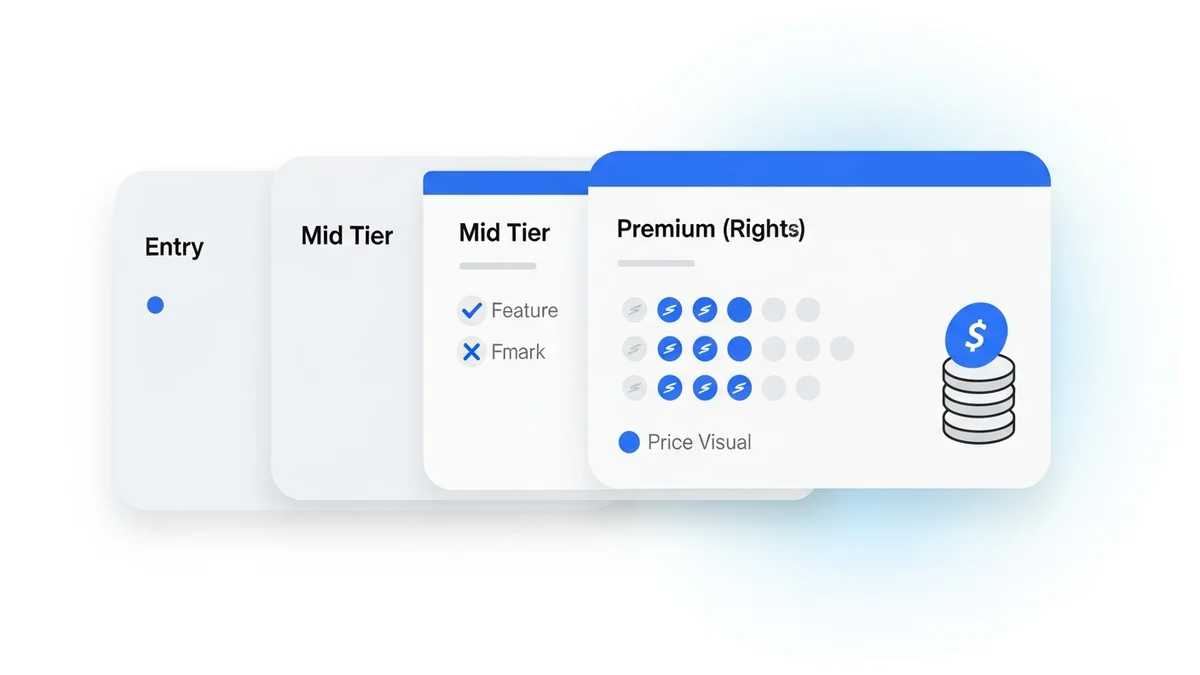
Fliki operates on a tiered subscription model. Based on current published pricing:
| Plan | Price | Best For | Key Limits |
|---|---|---|---|
| Free | $0/month | Testing the platform | Watermarked exports, limited voice minutes, no commercial use |
| Standard | ~$28/month | Solo creators, bloggers | HD exports, standard voices, limited AI credits |
| Premium | ~$88/month | Active content teams | Ultra-realistic voices, avatar access, custom voice |
| Enterprise | Typically $300+/month | Agencies, bulk production | Bulk create, API access, team collaboration, priority support |
The free plan is genuinely useful for evaluation but watermarked exports make it unsuitable for any client or audience-facing work. The Standard plan is the entry point for real production use. Premium unlocks the features most creators actually want — studio voices, avatars, and higher AI generation credits.
Who Should Use Fliki (and Who Shouldn't)
Fliki Works Well For:
- Faceless YouTube channels — The script-to-video pipeline with AI voiceover is purpose-built for this format. Creators report producing 3–5 videos per week using Fliki alone.
- Bloggers repurposing written content — Paste an article, generate a video, post to YouTube or social. The workflow is genuinely that fast once you understand scene editing.
- Marketers needing high-volume output — Bulk Create combined with Zapier integration makes Fliki scalable in ways that manual editing never can be.
- Educators — Turning lesson notes into structured video summaries with narration and captions is a natural fit for Fliki's scene-based format.
- Non-English content creators — Fliki's multilingual voice library with expressive delivery makes it one of the stronger options for creators working in languages beyond English.
Common Mistakes Users Make with Fliki:
- Using the free plan for client deliverables — Watermarks on exported video will immediately undermine client trust. Upgrade before sending anything to a client.
- Ignoring scene-level customization — Many users generate a video and export it without reviewing each scene's visual match. The auto-assigned stock footage is often generic. Spend 10 minutes reviewing and swapping visuals per video — the quality difference is significant.
- Treating AI voice as final without preview — Different voice options vary significantly in pacing and tone. Always preview the full narration before export, especially on longer scripts where pacing issues compound.
- Skipping the Editor Copilot — New users often miss this embedded AI assistant. It can rewrite scene text, suggest visual prompts, and improve script flow without you leaving the editor. Using it cuts production time further.
- Not using custom fonts and branding settings — Fliki's default styling is generic. Setting up your brand kit once (colors, fonts, logo) transforms output quality without extra effort per video.
How Fliki Compares to Alternatives
Fliki occupies a specific position in the AI video landscape. It is not trying to compete with pure generative video models like Google Veo 3.1 or Kling AI, which focus on cinematic AI video generation from prompts. Fliki is a structured production tool — the difference matters when choosing.
| Tool | Best Use Case | Starting Price | Fliki Advantage |
|---|---|---|---|
| Fliki | Script-to-video, TTS, faceless content | ~$28/month | TTS + avatar + bulk create in one tool |
| HeyGen | Avatar presenter videos, marketing | ~$29/month | HeyGen wins on avatar realism; Fliki wins on script workflow |
| Synthesia | Enterprise training videos | ~$29/month | Synthesia wins on enterprise features; Fliki more flexible for solo creators |
| Pictory | Blog-to-video repurposing | ~$19/month | Pictory cheaper at entry; Fliki stronger on voice and avatar options |
| D-ID | AI avatar video generation | ~$5.9/month | D-ID is cheaper; Fliki has broader production workflow |
The honest assessment: if you primarily need avatar videos for enterprise training, Synthesia has more mature tooling. If you need pure cinematic AI generation, look at models like Runway or Kling. If you need a complete script-to-video pipeline with TTS, avatars, captions, and bulk output — Fliki is one of the most complete single-platform solutions available in 2026.
Fliki's 2026 Feature Trajectory
Based on Fliki's recent release cadence, the platform is clearly investing in three areas:
- Character and visual consistency — The Character Consistency feature signals that Fliki understands its biggest quality gap (visual coherence across scenes) and is actively closing it.
- Automation and integrations — Zapier, Make, and Bulk Create show a deliberate push toward agency and enterprise use cases beyond solo creators.
- AI model quality — The Playground & Advanced Models feature and the AI Thumbnails v2 update indicate ongoing model upgrades rather than a static feature set. Expect the generative quality to continue improving through 2026.
For creators and teams evaluating long-term platform commitment, Fliki's update frequency is a positive signal. The platform shipped over 50 documented feature updates in its public changelog, covering everything from scene transition effects and media overlay filters to team collaboration and web research integration — a scope of development that suggests a well-resourced team actively responding to user feedback.
Final Verdict on Fliki Features
Fliki is purpose-built for one outcome: turning text into publishable video, fast, without a video editor. It executes that core job well. The text-to-video pipeline, multilingual TTS with expressive voices, scene-based editor, AI avatars, and bulk creation tools form a coherent production system that outperforms piecemeal alternatives for its target use case.
The platform is not the right choice if you need Hollywood-grade generative video, granular timeline control, or the highest-fidelity AI avatars in the market. But for faceless YouTube creators, content repurposers, multilingual marketers, and teams producing video at volume — Fliki's 2026 feature set is genuinely competitive, and its pricing is accessible at every tier that matters for real production work.