
What Is Fliki? A Strategic Overview for 2026
Fliki is a text-to-video platform built around one core promise: paste a script, pick a voice, and get a publish-ready video in minutes. Since launching, it has carved out a distinct niche in the crowded AI video space by prioritizing narration quality and workflow speed over cinematic realism. In 2026, that positioning still holds — but the competitive landscape has shifted dramatically with the arrival of tools like Google Veo 3.1 and Runway Gen 4.5, which push the boundaries of generative video quality.
Fliki's sweet spot is content repurposing and narration-driven video at scale. If your workflow involves turning blog posts, how-to guides, or product explainers into social-ready video — without hiring a video editor or recording studio — Fliki is purpose-built for exactly that. It is available on Web, iOS, and Android, making it one of the more accessible platforms for solo creators and small marketing teams.
Understanding where Fliki excels and where it falls short is critical before committing to a subscription. This guide breaks down every major pro, con, pricing tier, and use-case consideration so you can make an informed decision.
Fliki Core Features at a Glance
| Feature | What It Does | Best For | Watch-Outs |
|---|---|---|---|
| Text-to-Video | Converts a script or URL into scene blocks with media, captions, and timing | How-tos, listicles, blog repurposing, social promos | Complex layouts may still need an external editor |
| AI Voices | Lifelike narration in 75+ languages with basic speed and pitch controls | Voiceover-led shorts, explainers, multilingual content | Long-form reads can expose audio artifacts |
| Voice Cloning | Trains a custom voice profile for consistent brand narration | Brand consistency, course libraries, spokespeople | Quality depends heavily on training audio quality |
| AI Avatars | On-screen presenter or spokesperson videos | Product explainers, sales demos, intros | Availability limited to higher tiers; overuse can feel uncanny |
| Templates and Brand Kits | Pre-built layouts with saved fonts, colors, and logos | Speed at scale, multi-creator teams | Uncustomized templates look generic without brand adjustments |
| Subtitles and Captions | Auto-generated captions synced to narration | Social media content, accessibility compliance | Accuracy drops with heavy accents or fast speech |
Fliki Pros: Where It Genuinely Shines
1. Best-in-Class Narration Speed
Fliki's biggest competitive advantage is the speed at which it converts written content into narrated video. Pasting a 500-word blog post and getting a structured, scene-by-scene video with synchronized voiceover in under two minutes is genuinely impressive. For content teams publishing multiple videos per week, this workflow acceleration is measurable and significant.
2. 75+ Language Support with Lifelike Voices
The AI voice library covers over 75 languages and hundreds of accents. For brands targeting multilingual audiences — particularly in European, Southeast Asian, or Latin American markets — this breadth is a major advantage without the cost of hiring native-language voice actors. The voices are among the more natural-sounding in this price range, avoiding the robotic cadence common in earlier-generation TTS tools.
3. URL-to-Video Workflow
One of Fliki's most underrated features is its ability to ingest a URL and automatically structure the content into a video script. Paste a blog post link, and Fliki extracts the key points, assigns stock media, and generates captions — all without manual scripting. This is invaluable for SEO-focused publishers who want to repurpose written content for YouTube or social platforms.
4. Voice Cloning for Brand Consistency
The voice cloning feature lets teams train a custom voice model that sounds like a real spokesperson or brand narrator. For companies with large content libraries — online course creators, SaaS knowledge bases, product tutorial channels — this eliminates the cost and scheduling friction of recurring voiceover sessions.
5. Cross-Platform Availability
Fliki runs on Web, iOS, and Android. This is not a minor detail: mobile availability means creators can review, approve, and publish video content from anywhere. Most competing tools in this category are web-only, which limits flexibility for distributed teams.
Newsletter
Get the latest SaaS reviews in your inbox
By subscribing, you agree to receive email updates. Unsubscribe any time. Privacy policy.
6. Affordable Entry Point Relative to Avatar-Focused Competitors
Compared to avatar-heavy platforms like Synthesia (starting at $22/month for very limited output) or HeyGen (starting at $29/month), Fliki's pricing is competitive for teams that need volume output rather than high-fidelity presenter avatars.
Fliki Cons: Where It Falls Short
1. Stock Media Dependency Creates Generic Output
Fliki populates scenes with stock footage from its media library. The result is functional but visually predictable — the same Pexels-style clips that appear in thousands of other content marketing videos. If your brand requires original visuals or cinematic quality, Fliki cannot compete with generative video tools like Runway Gen 4.5 or Luma Dream Machine, which generate original footage from prompts.
2. Limited Creative Control Over Scene Composition
Fliki is optimized for speed, not precision. Users who need fine-grained control over scene transitions, motion graphics, or layout will quickly hit the ceiling. The editor handles macro-level adjustments — swap a clip, change a font, adjust timing — but pixel-level composition requires exporting to a dedicated editor like DaVinci Resolve or Adobe Premiere.
3. Audio Artifacts on Long-Form Content
AI voice quality degrades on longer scripts. Narrations exceeding 5-7 minutes frequently exhibit unnatural pacing, slight mispronunciations on technical terms, and tonal inconsistencies between scene blocks. This makes Fliki less suitable for podcast-style content or long-form educational videos where audio quality is paramount.
4. Avatar Quality Lags Behind Specialist Platforms
While Fliki offers AI avatars, their quality and realism are noticeably below dedicated avatar platforms. If presenting with a photorealistic digital spokesperson is core to your use case, purpose-built tools deliver significantly better results at comparable price points.
5. No Native Generative Video — Stock Only
Fliki does not generate original video footage from text prompts the way tools like Sora 2 or Kling AI do. Every visual in a Fliki video comes from stock libraries or assets you upload yourself. For marketers who need truly unique visual content, this is a hard ceiling.
6. Watermarks and Minute Caps on Lower Tiers
The free plan includes a visible watermark and caps output at 5 minutes per month — barely enough to evaluate the tool, let alone produce usable content. The Standard tier at $28/month provides 180 minutes of video, which sounds generous until you account for revision cycles and scene rebuilds that consume quota without producing final output.
Fliki Pricing: Full Breakdown
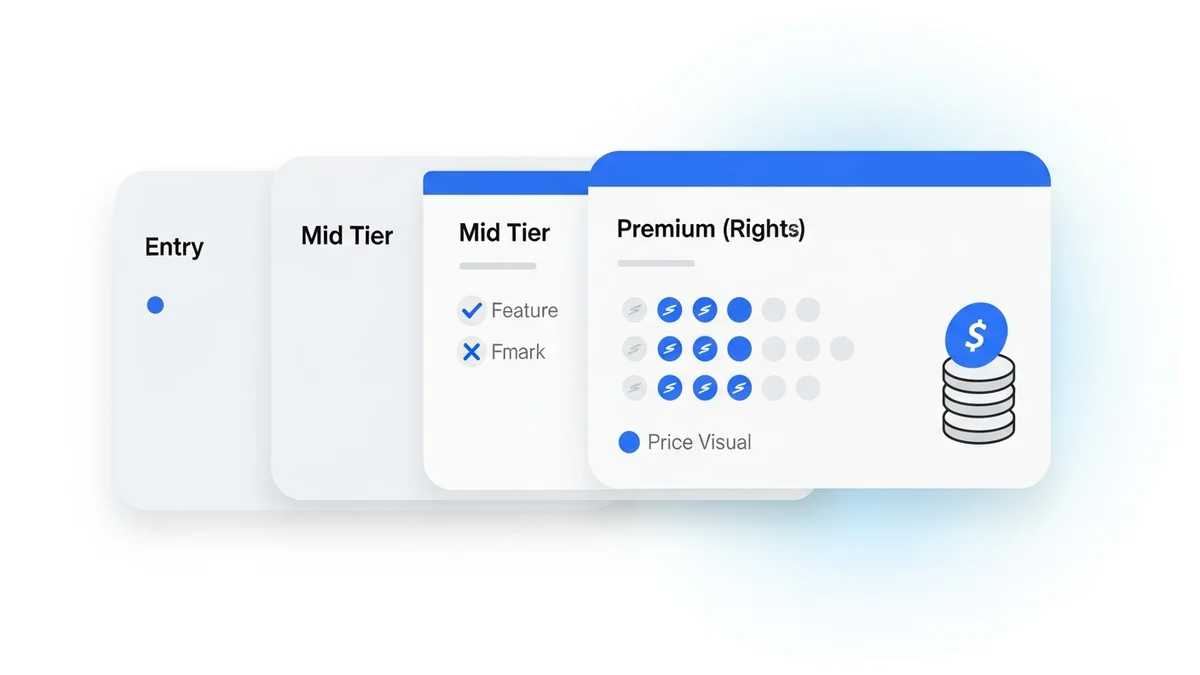
| Plan | Monthly Price (Annual Billing) | Video Minutes | Key Limitations |
|---|---|---|---|
| Free | $0 | 5 minutes/month | Watermark on all exports, no voice cloning, limited stock media |
| Standard | $28/month | 180 minutes/month | No voice cloning, limited avatar access, HD export only |
| Premium | $88/month | 600 minutes/month | Voice cloning included, full avatar access, 4K export |
| Enterprise | Custom (typically $300+/month) | Unlimited | Dedicated support, API access, custom integrations |
The jump from Standard to Premium is steep — $60/month more for voice cloning and avatar access. Teams that need those features should budget for Premium from the start rather than treating Standard as a path to them. Enterprise pricing makes sense for agencies producing 50+ videos per month or businesses requiring API-level integration.
Who Should Use Fliki — And Who Should Not
Fliki Is the Right Tool If You:
- Produce 4-20 narration-driven videos per week from existing written content
- Need multilingual voiceover without per-language recording costs
- Run a content marketing operation that repurposes blog posts for YouTube or LinkedIn
- Want a fast, low-friction workflow over cinematic output quality
- Are a solo creator or small team without a dedicated video editor
- Manage an online course library that needs consistent brand narration
You Should Look Elsewhere If You:
- Need generative, original video footage from text prompts — consider Kling AI or Luma Dream Machine instead
- Require photorealistic avatars as a core deliverable — Synthesia or HeyGen are purpose-built for this
- Are producing long-form documentary or cinematic content
- Need frame-accurate editing tools integrated into your AI video workflow
- Are working with high-production brand campaigns where stock footage is unacceptable
Common Mistakes Users Make With Fliki
Mistake 1: Skipping Brand Kit Setup
Most new users jump straight to generating videos without configuring their brand kit — fonts, color palette, logo. The result is a video that looks like it came from a template library, because it did. Spending 15 minutes setting up brand kit before your first project saves hours of manual scene-by-scene editing later.
Mistake 2: Using the Free Plan for Client Deliverables
Fliki's watermark on free exports is prominent and centered. Several agencies have made the mistake of generating client-facing content on the free plan, only to discover the watermark cannot be removed in post without re-generating at paid tier. Always produce client deliverables from a paid account.
Mistake 3: Relying on Auto-Generated Script Structure for Technical Content
Fliki's URL-to-video parsing works well for general content but mishandles technical documentation, heavily data-driven articles, and content with complex formatting. Feeding a technical API reference into Fliki's URL importer produces chaotic scene blocks that require more time to fix than writing the script manually would have taken. For technical content, write and paste a clean script directly.
Mistake 4: Ignoring Voice Preview Before Production
With hundreds of voice options, many users select a voice based on the short preview clip and discover — mid-production — that the voice handles their specific script poorly. Always generate a 60-second test segment with your actual content before committing to a voice for a full project. This is especially important for languages with regional accent variation.
Mistake 5: Treating Minute Quotas as Equivalent to Output
On the Standard plan, 180 minutes of quota sounds like 180 minutes of finished video. In practice, revision cycles, scene rebuilds, and A/B testing consume quota without producing final output. Realistic production output on Standard is closer to 60-90 minutes of final, export-ready video per month. Plan accordingly before hitting your quota ceiling mid-campaign.
Fliki vs. The Field: Where It Ranks in 2026
Fliki sits in a well-defined position in the 2026 AI video market. It is not competing with generative powerhouses like Sora 2 or Runway Gen 4.5 on visual quality — nor does it need to. Its competition is other text-and-narration-first platforms like Pictory and similar repurposing tools, where it competes strongly on voice quality and workflow speed.
For teams choosing between Fliki and a full generative video suite, the decision comes down to workflow. Fliki is faster and cheaper for narration-driven content at volume. Generative tools produce more visually compelling output but require significantly more prompt engineering and production time per video. Most content-heavy operations benefit from having both — Fliki for weekly volume output, a generative tool for campaign hero content.
In the avatar and spokesperson category, Fliki's avatars are functional but not its strongest suit. Teams for whom presenter-style video is core to their strategy should evaluate dedicated avatar platforms before defaulting to Fliki for that use case.
Overall, Fliki earns its position as a reliable, cost-effective workhorse for text-to-video production in 2026. Its limitations are real and specific — stock media dependency, no native video generation, audio artifacts at scale — but for the workflow it is built for, it executes consistently and at a price point that makes volume production economically viable.