
Hour One Pricing Plans: Everything You Need to Know in 2025
Hour One is an AI avatar video platform that lets businesses create presenter-led videos using virtual human characters — no camera, no studio, no on-screen talent required. If you're evaluating it for training content, internal communications, e-commerce, or marketing, understanding exactly what each plan costs and includes is critical before you commit. This guide breaks down every tier, surfaces the hidden costs, and compares Hour One against real competitors so you can make a confident decision.
Hour One Plan Overview
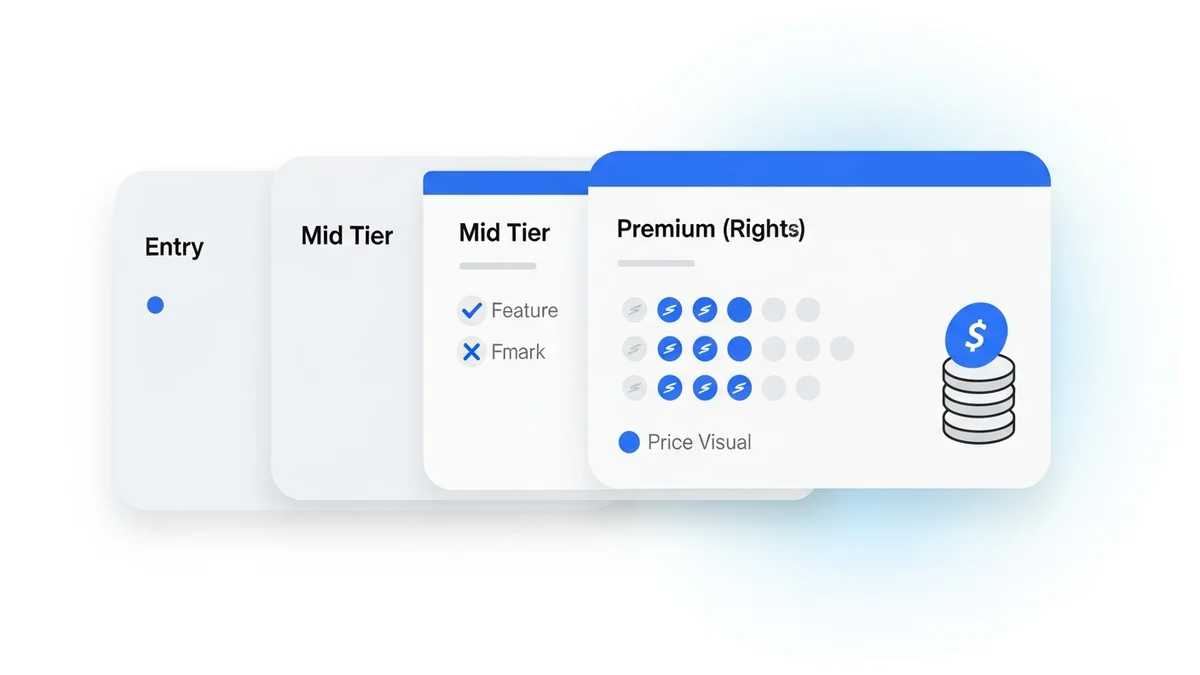
Hour One offers three pricing tiers: Lite, Business, and Enterprise. The platform is billed on a per-seat subscription model, meaning pricing scales with the number of users on your account. All plans give you access to the core avatar video creation workflow — you pick a template, choose a virtual human presenter, and provide a script.
Lite Plan — $30/user/month
The Lite plan starts at $30 per member per month and is the entry point for individuals and small teams testing avatar-based video creation. Key inclusions and limitations:
- Up to 3 minutes of video output per month
- Access to Hour One's core library of virtual human avatars
- Text-to-video generation from written scripts
- Pre-built video templates for common use cases (training, announcements, product explainers)
- AI-guided video creation workflow
- Caption generation
- Single user seat
- Standard resolution exports
At 3 minutes per month, the Lite plan is genuinely limiting for any production workload. Three minutes of finished video translates to roughly one short explainer or one internal update clip. If you exceed this cap, you will need to upgrade — there is no pay-as-you-go overage on the Lite tier.
Business Plan — ~$100/user/month
The Business plan is Hour One's mid-tier offering, designed for teams with recurring video production needs. Pricing is approximately $100 per user per month when billed monthly, with a discount available on annual billing (typically 20–25% off, bringing the effective rate to around $75–80/user/month). Inclusions at this tier include:
- Significantly expanded monthly video minutes (typically 30–60 minutes/month depending on seat count)
- Full access to the complete avatar and voice library, including multi-language support
- Brand customization — logos, colors, fonts applied to templates
- Team collaboration features (shared workspaces, comments)
- Higher resolution video exports
- Priority rendering queue
- Access to more advanced video templates across L&D, HR, news, and e-commerce verticals
- API access (limited calls)
Enterprise Plan — Custom Pricing (typically $500+/month)
The Enterprise tier is for organizations that need custom avatars, high-volume production, SSO, advanced security controls, and dedicated support. Pricing is negotiated directly and typically starts at $500+/month for smaller enterprise deployments, scaling significantly for larger seat counts or white-label use. Enterprise features include:
- Custom AI avatar creation (your own branded spokesperson or digital twin)
- Unlimited or very high monthly video minute allowances
- White-label video output (no Hour One branding)
- SSO and enterprise-grade security
- Dedicated customer success manager
- SLA guarantees and priority support
- LMS and CMS integrations
- Advanced API access for programmatic video creation
Hidden Costs and What to Watch For
Hour One's pricing page shows the base subscription cost, but there are several cost factors that can catch buyers off-guard:
Per-Seat Pricing Adds Up Fast
The $30 Lite price is per member, per month. A five-person content team on the Lite plan costs $150/month — and at 3 minutes per seat, your total monthly output is still only 15 minutes. Teams often discover they need the Business tier far sooner than expected, pushing real costs to $500+/month for five seats at the Business level.
Video Minute Caps and Overages
On the Lite plan, you get 3 minutes of video per month — with no documented overage option. You must upgrade your plan to produce more. On Business, minutes are pooled or allocated per seat depending on your contract terms. If your content pipeline is seasonal (e.g., a spike in onboarding videos in Q1), you may be paying for unused minutes in slower months.
Newsletter
Get the latest SaaS reviews in your inbox
By subscribing, you agree to receive email updates. Unsubscribe any time. Privacy policy.
Custom Avatar Fees
The standard avatar library is included in all plans, but creating a custom AI avatar — a photorealistic digital version of a real person or branded spokesperson — is an Enterprise-only feature and is priced separately as an add-on. Expect this to cost hundreds to thousands of dollars per custom avatar, depending on production requirements.
Annual vs. Monthly Billing
Hour One rewards annual commitment with meaningful discounts. If you're confident in the platform after a trial, locking into an annual plan on the Business tier can save approximately $240–$300 per seat per year versus month-to-month billing.
API Usage Costs
Advanced API access is available on Business and Enterprise but may have call limits or overage charges for high-volume programmatic video generation. If you're building an automated pipeline (e.g., product video generation at scale), confirm API rate limits and associated costs before committing.
Hour One vs. Competitors: Pricing Comparison Table
To put Hour One's pricing in context, here's how it compares to the most direct avatar video platform alternatives. Prices shown are monthly billing unless noted.
| Platform | Entry Plan | Mid Tier | Enterprise | Key Differentiator |
|---|---|---|---|---|
| Hour One | $30/user/mo (Lite, 3 min/mo) | ~$100/user/mo (Business) | $500+/mo custom | Template-guided avatar workflow; L&D focus |
| Synthesia | $30/mo (Starter, 10 min/mo) | $79/mo (Creator, 30 min/mo) | $500+/mo custom | Largest stock avatar library; strong enterprise adoption |
| HeyGen | $29/mo (Creator, 15 min/mo) | $89/mo (Business, 30 min/mo) | Custom pricing | Strong custom avatar cloning; broader creative flexibility |
| D-ID | $5.90/mo (Lite, 10 credits) | $49.90/mo (Pro, 100 credits) | Custom pricing | Most affordable entry point; API-first approach |
Key takeaway from the table: At the entry level, Hour One's $30/month for only 3 minutes of video is the least generous allowance among major competitors. Synthesia gives you 10 minutes at the same price, and HeyGen offers 15 minutes for $1 less. D-ID's credit-based model is significantly cheaper for low-volume users. Hour One's value proposition strengthens at the Business and Enterprise tiers where its workflow guidance, multi-language depth, and vertical-specific templates (especially L&D and HR) justify the premium.
Who Each Plan Is Best For
Lite Plan ($30/user/month) — Best For Evaluation and Very Low Volume
The Lite plan makes sense in two narrow scenarios: you're running a proof-of-concept before pitching Hour One to your organization, or you genuinely need only one to two short videos per month (e.g., a monthly team update or a single product announcement). A solo founder creating one explainer video per month for their company newsletter fits this tier well. For anyone with a real content calendar, 3 minutes runs out immediately.
Business Plan (~$100/user/month) — Best For L&D Teams and Content Marketers
This is where Hour One actually delivers ROI. A corporate L&D team producing weekly microlearning modules, a HR department rolling out policy update videos, or a marketing team running localized video campaigns across multiple languages will find the Business tier's expanded minute bank, brand customization, and collaboration tools genuinely useful. A team of three producing 10–15 training videos per month represents a strong fit — the cost per video drops well below traditional video production rates.
Enterprise Plan ($500+/month) — Best For Large Organizations With Custom Avatar Needs
Enterprise makes sense when you need a branded AI spokesperson (think a bank's virtual advisor or a retailer's virtual sales assistant), when you have strict security and SSO requirements, or when you're generating video programmatically via API at scale. Media companies, large e-learning publishers, and enterprises with global localization requirements are the core audience here.
Money-Saving Tips for Hour One
1. Start Annual, Not Monthly
If you've validated the platform with a trial and know you're staying for at least a year, commit to annual billing immediately. The roughly 20–25% discount on the Business plan saves $240–$300 per seat annually — meaningful for a 5-person team.
2. Audit Your Minute Usage Before Upgrading Seats
Because pricing is per seat, adding a user automatically increases costs. Before adding seats, check whether your existing seat's minute allocation is actually maxed out. For smaller teams, one Business seat shared across a small content team (with one primary editor) may be more cost-efficient than multiple Lite seats.
3. Batch Your Content Into Production Sprints
Given the monthly minute caps, align your video production with your billing cycle. Batch-produce all your month's videos in a concentrated sprint rather than spreading production out, so unused minutes don't roll over and go to waste. This also helps you accurately predict your true monthly video volume before deciding to upgrade.
4. Use Templates Aggressively to Minimize Editing Time
Hour One's template library is one of its strongest assets. Using pre-built templates significantly reduces the time-to-publish per video, which means you produce more video output per minute of platform time — effectively increasing the ROI of your minute allowance.
5. Compare Against Synthesia and HeyGen Before Committing
If avatar quality and minute allowance are your primary criteria (rather than Hour One's specific workflow or vertical templates), run a side-by-side trial with Synthesia and HeyGen. Both offer more minutes at comparable or lower price points at the entry and mid levels. If you're evaluating text-to-video without avatars, also consider Runway Gen 4.5 or Pictory for different creative use cases.
Is Hour One Worth the Price?
Hour One earns a strong 4.5/5 user score across review platforms and is particularly well-regarded in the L&D and HR video space. Its guided, template-driven workflow reduces the skill barrier for non-video-editors, and its multi-language avatar library is legitimately broad. However, the Lite plan's 3-minute cap is one of the tightest restrictions in the avatar video market at the $30 price point — buyers should realistically budget for the Business tier at minimum.
For teams primarily interested in generative video rather than avatar-led presenter content, the landscape is broader. Tools like Google Veo 3.1 and Luma Dream Machine serve fundamentally different creative use cases. Hour One's specific strength is repeatable, scalable presenter-style video — if that's your use case, the Business plan at ~$100/user/month is competitively positioned and worth serious evaluation.
Bottom line: budget $100/user/month as your real planning number, commit to annual billing to reduce that by ~20%, and run a Lite trial for one billing cycle before making a multi-seat commitment.