
InVideo AI in 2026: The Most Honest Pros and Cons Breakdown
InVideo AI has quietly become one of the most talked-about platforms in the AI video space — and after October 2025, it made a move that genuinely changed the conversation. By securing exclusive integration partnerships with both OpenAI (Sora 2) and Google (VEO 3.1), InVideo positioned itself as the only platform on the market offering unified access to two of the most advanced generative video models available. That is a significant claim. This guide breaks down exactly what that means in practice, where InVideo delivers real value, and where it still falls short.
What InVideo AI Actually Is (And What It Is Not)
InVideo has existed since 2017, originally as a template-based drag-and-drop editor. The AI product that most people mean when they say "InVideo" today is a distinct evolution — a full-stack video generation platform where you describe a video in plain text and the system handles scripting, visual selection, voiceover, captions, transitions, and music automatically.
The platform runs two parallel products: InVideo AI (text-to-video generation) and InVideo Studio (traditional editor). This review focuses on the AI product, which is where the company has concentrated its development resources and where the October 2025 model integrations live.
The scale numbers tell part of the story: 50 million users across 190+ countries, approximately 8 million videos created per month, and $52.5 million in total funding including a $35 million Series B. This is not a side project — it is a funded platform with a genuine product roadmap and competitive pressure driving continuous updates.
The October 2025 Game-Changer: Sora 2 and VEO 3.1 Access
The most important context for evaluating InVideo AI right now is its dual model integration. In October 2025, InVideo became OpenAI's first official partner for Sora 2 integration and secured trusted partner status with Google for Google Veo 3 1 access. No other platform currently offers both under one subscription.
Here is why the pricing context matters: accessing Sora 2 directly through ChatGPT Pro costs $200 per month with heavy usage restrictions. Google Veo 3 1 Ultra runs close to $250 per month as a standalone product. InVideo bundles access to both starting at $25–28 per month. If either of those models is part of your workflow, the math on InVideo's pricing becomes very straightforward.
InVideo AI: Core Pros
1. Unmatched Model Access at the Price Point
No comparable platform offers integrated access to both Sora 2 and VEO 3.1 at this price tier. For content creators and marketers who need cutting-edge generative video quality without $400–$450 per month in standalone model subscriptions, InVideo represents genuine value compression. The platform makes over 500 autonomous creative decisions per video, pulling from a library of 16 million royalty-free stock assets when AI-generated footage is not the right fit.
2. Dramatic Time Savings for Non-Editors
Before AI video tools, producing a functional marketing video with voiceover, b-roll, captions, transitions, and music required a skilled editor half a day minimum. Outsourced, that work costs several hundred dollars per video. InVideo compresses the same output to 20–30 minutes for a solid first draft, including script writing. The platform's reviewers consistently cite 95% time savings compared to traditional production workflows.
3. Multilingual Output Without Talent Costs
InVideo supports 50+ languages with auto-translated voiceovers and native-sounding AI voice actors. A brand can produce a Spanish-language Instagram reel with a localized voiceover without hiring a Spanish voice actor or running a separate dubbing pass. For businesses targeting multiple markets simultaneously, this is a concrete cost reduction — not a theoretical one.
4. Faceless Content Pipeline
YouTube and TikTok creators building channels without appearing on camera have a complete pipeline inside InVideo: AI voiceover, UGC-style avatars, auto-subtitles, and background music selection. Compared to avatar-focused tools like Heygen or Synthesia, InVideo's advantage is the full-stack approach — you are not paying separately for script generation, stock footage, and avatar rendering.
5. Volume and Consistency for Social Teams
Social media teams and solo creators who need consistent video output across multiple platforms benefit from InVideo's ability to produce multiple variants quickly. One creator can publish five videos in the time it previously took to produce one. Performance marketers running A/B tests on ad creative — which previously required reshoots or separate production passes — can generate multiple variants from a single prompt session.
6. Accessible to Non-Technical Users
The generation interface is genuinely low-friction. You describe the video you want, and the platform handles the rest. Small businesses without video expertise or dedicated marketing staff can produce content that previously required agency relationships. The average generation time runs 3–5 minutes per video.
Newsletter
Get the latest SaaS reviews in your inbox
By subscribing, you agree to receive email updates. Unsubscribe any time. Privacy policy.
InVideo AI: Core Cons
1. Technical Reliability Issues
Testing across multiple sessions reveals inconsistent output quality. Generation errors, failed renders, and outputs that diverge significantly from the original prompt are reported with enough frequency to affect workflows with zero error tolerance. For creators on a flexible publishing schedule, these hiccups are manageable. For teams with hard deadlines and no buffer, InVideo is a risky primary dependency.
2. Prompt Accuracy Gaps
The platform's autonomous decision-making — while a strength for speed — creates friction when you need specific visual outputs. InVideo makes creative decisions on your behalf, and those decisions do not always match the intent of the prompt. Achieving precise visual results often requires multiple regeneration passes, which consumes credits and time. Tools like Runway Gen 4 5 offer more granular control for users who need pixel-level precision.
3. Credit System Complexity
The credit-based usage model adds a layer of cost unpredictability, particularly for budget-conscious solo creators. High-quality generation using Sora 2 or VEO 3.1 consumes credits faster than standard generation, meaning the effective monthly capacity at lower tiers may not match expectations set by the headline pricing.
4. Not Built for Professional Film Production
InVideo AI is optimized for social content, marketing videos, and faceless YouTube — not for projects requiring professional-grade cinematic precision. If your use case involves precise shot composition, controlled lighting continuity, or editorial control at the frame level, InVideo's automation will work against you rather than for you. For those projects, the better path runs through Runway Gen 4 5 or Luma Dream Machine.
5. Dependence on AI Model Partnerships
InVideo's current competitive advantage rests significantly on its Sora 2 and VEO 3.1 integrations. These are partnership arrangements, not proprietary technology. If OpenAI or Google adjust their partner terms, open direct access at competitive pricing, or InVideo's agreements change, a core part of the platform's value proposition shifts. This is a structural risk worth factoring into any long-term dependency decision.
Pricing Breakdown
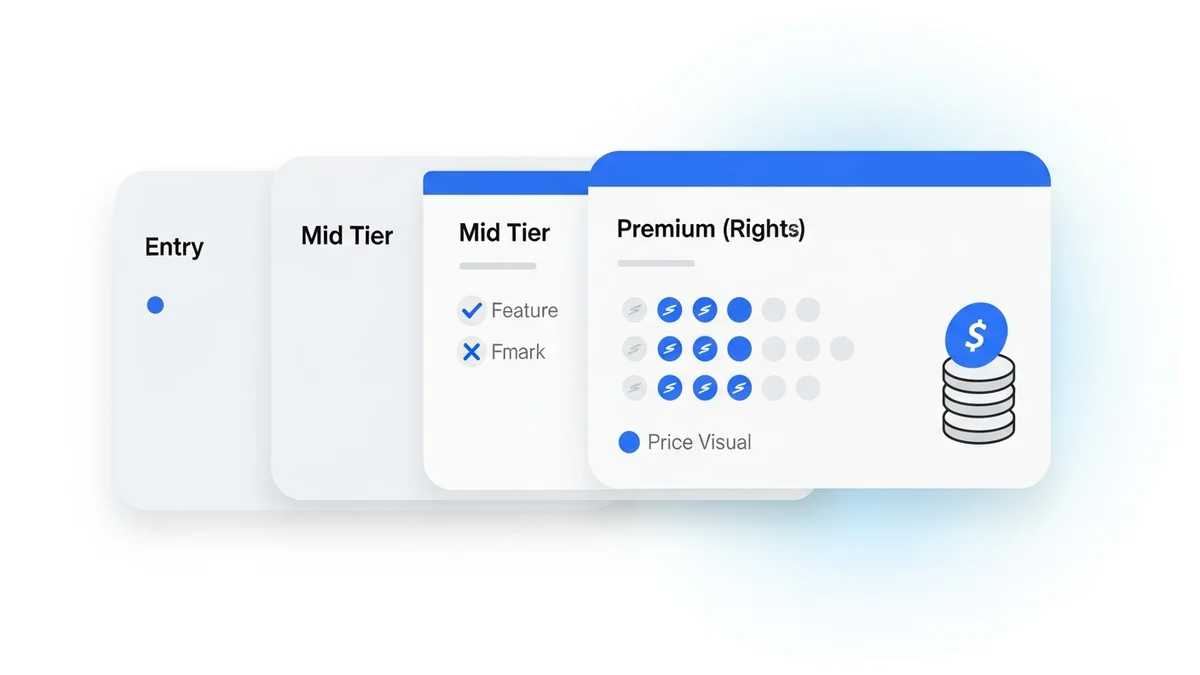
| Plan | Price | Key Inclusions | Best For |
|---|---|---|---|
| Free | $0/month | Limited generations, watermarked output, standard stock | Testing the platform before committing |
| Starter | From $25–28/month | Sora 2 + VEO 3.1 access, 50+ language voiceovers, 16M stock assets | Solo creators and small businesses |
| Business | Up to ~$100/month | Higher credit volume, priority generation, team collaboration features | Social media teams and agencies |
| Standalone Sora 2 | $200/month (ChatGPT Pro) | Direct OpenAI access with usage restrictions | OpenAI-only workflow users |
| Standalone VEO 3.1 | ~$250/month | Direct Google access | Google-only workflow users |
Who Should Use InVideo AI
Strong Fit
- Content creators producing high-volume social media — The speed and automation justify the trade-offs in precision control
- Marketing teams generating ad variants — Multiple video versions from a single brief without reshoots
- Small businesses without video production resources — Access to professional-quality output without agency costs
- Faceless YouTube and TikTok creators — Complete pipeline from script to published video
- Multilingual brands — 50+ language voiceovers eliminate separate localization workflows
- Anyone already budgeting for Sora 2 or VEO 3.1 — InVideo makes the combined cost significantly lower
Poor Fit
- Professional film and commercial production — Precision requirements exceed what automation can reliably deliver
- Hard-deadline workflows with zero error tolerance — Reliability inconsistencies make InVideo a risk as the sole production dependency
- Projects requiring pixel-perfect visual control — Use Runway Gen 4 5 or Pika Labs instead
- Budget-constrained solo users with unpredictable credit needs — The credit system introduces cost variability that may not suit tight budgets
Common Mistakes to Avoid
Mistake 1: Over-Relying on the First Output
InVideo's automation is good at producing a strong first draft, not a final product. Users who publish or present the first generation without reviewing it for prompt accuracy, visual coherence, or tone mismatches consistently report quality problems. Build at least one review and regeneration pass into your workflow.
Mistake 2: Using InVideo for Precision-Dependent Projects
Agencies that have attempted to use InVideo for client work requiring specific brand visuals, controlled shot sequences, or precise product placement have reported wasted time and regeneration credit burns. InVideo is a volume and speed tool. For precise creative control, Runway Gen 4 5 or Kling Ai are more appropriate choices.
Mistake 3: Ignoring Credit Consumption on Premium Models
Generating with Sora 2 or VEO 3.1 uses significantly more credits than standard generation. Creators who default to premium models for every output without accounting for credit costs burn through monthly allocations faster than their plan supports, leading to mid-month paywalls. Plan your model usage by output type — save premium generation for hero content, not routine social posts.
Mistake 4: Not Leveraging the Multilingual Features
Many users treat InVideo as an English-only tool when the multilingual voiceover and subtitle system is one of its most differentiated capabilities. Brands targeting European or Latin American markets that are still running separate localization workflows are leaving direct cost savings on the table.
How InVideo Compares to the Alternatives
The key comparison points depend on use case. For avatar-based video and AI presenters, Heygen and Synthesia offer deeper avatar customization and enterprise-grade presenter workflows, but neither bundles a full stock library or the Sora 2/VEO 3.1 model access. For pure generative video quality and creative control, Runway Gen 4 5 and Luma Dream Machine produce more cinematically precise outputs — but at higher cost and with a steeper learning curve. For blog-to-video and article repurposing specifically, Pictory is purpose-built for that workflow in a way InVideo is not. InVideo's strongest position is as a full-stack solution for creators who need speed, volume, and access to frontier models without managing multiple subscriptions.
Final Verdict
InVideo AI in 2026 is the right tool for a specific type of user: content creators, marketers, and small business teams who need consistent, professional-quality video output at speed, and who benefit from access to Sora 2 and VEO 3.1 without paying $400+ per month to access those models separately. The platform's automation genuinely delivers 95% time savings over traditional production workflows, and the multilingual pipeline is a concrete competitive advantage for brands operating across multiple markets.
The caveats are real. Technical reliability is not at the level required for zero-tolerance production environments. Prompt accuracy requires iteration. The credit system adds cost unpredictability at lower tiers. And InVideo's competitive position depends substantially on partnership agreements rather than proprietary model technology.
If you are a solo creator, social media team, or small business that needs video at volume and is not dependent on cinematic precision, InVideo AI is the most cost-efficient path to frontier-model video generation currently available. If you need frame-level control, guaranteed reliability, or professional film-quality outputs, look at Runway Gen 4 5, Luma Dream Machine, or Kling Ai instead.