
What Is Descript and Who Actually Needs It?
Descript is an all-in-one AI-powered video and audio editing platform that takes a fundamentally different approach to post-production. Instead of timeline-based editing, it lets you edit your content by editing a text transcript — delete a word from the text, and it disappears from the video. It's built primarily for podcasters, YouTubers, educators, and content teams who spend hours trimming talk-heavy recordings.
The platform bundles several distinct tools: text-based video editing, AI transcription, screen recording, collaborative review, and its most controversial feature — Overdub, an AI voice cloning system that regenerates audio in your own voice when you type corrections. In 2026, Descript has positioned itself against both traditional editors like Adobe Premiere and AI-native video tools like HeyGen and Synthesia. The question is whether it delivers enough value at its price point to justify the subscription.
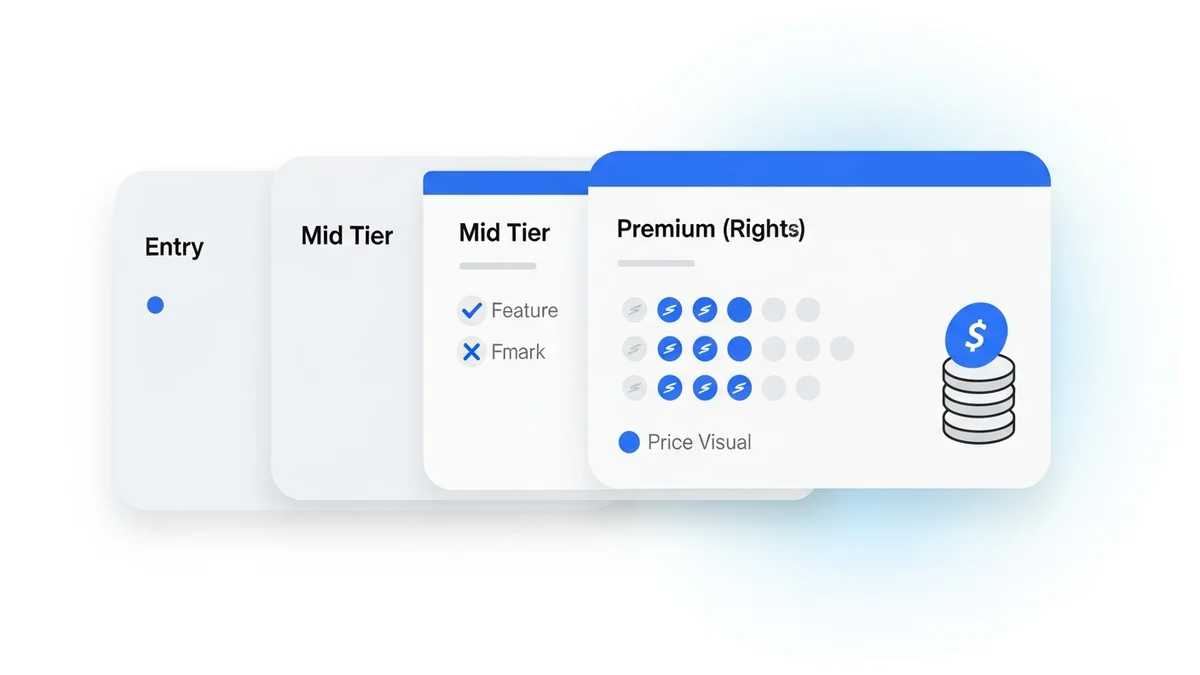
Descript Pricing Breakdown: What You Actually Get Per Plan
Descript's pricing structure in 2026 has three main tiers. Here is an honest breakdown of what each plan delivers — and where the value starts to erode.
| Plan | Monthly Cost | Key Features | Overdub Access | Best For |
|---|---|---|---|---|
| Free | $0/month | Basic transcription, 1 hour transcription/month, watermarked exports | 1,000-word vocabulary cap | Testing only — not viable for production |
| Hobbyist | $12/month | 10 hours transcription/month, basic AI editing, no watermark | Limited Overdub access | Casual podcasters with low volume |
| Creator | $24/month | 30 hours transcription/month, full AI features, multi-track editing | Full Overdub with voice cloning | Active YouTubers and podcast producers |
| Business | $40/month per user | Unlimited transcription, team collaboration, advanced review tools | Full Overdub + team voice libraries | Content agencies and enterprise teams |
The critical breakpoint is the Creator plan at $24/month. Below that, the Overdub vocabulary cap makes voice cloning functionally useless for real content. The Free plan's 1,000-word limit won't get you through a single edited interview segment, let alone a full episode. If you're evaluating Descript seriously, you're evaluating it at $24/month minimum.
Descript Overdub: The Voice Cloning Feature Everyone Is Talking About
Overdub is the headline feature that separates Descript from basic transcription editors. The premise is compelling: record 10–30 minutes of clean audio, wait 24–48 hours for your voice model to train, and then fix audio mistakes by simply typing corrections in the transcript. No re-recording. No studio time.
How Voice Training Actually Works
- You upload at least 10 minutes of clear English speech with no background noise
- Descript's AI processes the audio over 24–48 hours to build your voice model
- Background noise, mic quality, and recording consistency all directly affect output quality
- More varied training content (different sentence structures, emotional registers) produces better results
- Voice models are English-only — non-English speakers cannot clone their voice
Where Overdub Falls Short
Users consistently report several recurring problems with Overdub in real workflows. The generated audio frequently sounds robotic on longer regenerated segments. Lip-sync quality in video exports is poor when overdubbed sections are longer than a few words. The platform has a documented history of crashes during rendering, which is particularly frustrating when you're deep into a complex edit. At $24/month, you're paying Creator pricing for technology that many reviewers describe as beta-quality in 2026.
For comparison, dedicated AI presenter tools like Synthesia and D-ID have invested heavily in lip-sync fidelity and multi-language voice generation — areas where Descript's Overdub still lags significantly.
Newsletter
Get the latest SaaS reviews in your inbox
By subscribing, you agree to receive email updates. Unsubscribe any time. Privacy policy.
Core Editing Features: Where Descript Genuinely Delivers
Strip away the Overdub hype and Descript's text-based editing workflow is genuinely powerful for the right use case. Here's where it earns its price tag.
Text-Based Video Editing
This is Descript's best feature with no asterisks. Import a talking-head video or podcast recording, and within minutes you have a fully searchable transcript. Delete filler words like "um" and "uh" in bulk with one click. Cut sections by highlighting and deleting text. For talk-heavy content — interviews, tutorials, webinars, course videos — this approach is dramatically faster than scrubbing a timeline.
AI Transcription Accuracy
Descript's transcription engine is competitive with standalone tools. Accuracy rates in controlled tests run between 90–95% for clear English speech. For technical content or strong accents, accuracy drops notably. You'll still need to proofread, but the baseline is good enough that transcription is rarely the bottleneck.
Screen Recording and Composition
Descript includes a built-in screen recorder and a basic composition layer for adding titles, captions, and b-roll. It's not a replacement for full-featured video generators like Runway Gen 4.5 or creative tools like Pika Labs, but for assembling tutorial-style content it's functional without needing a separate tool.
Collaboration and Review
The Business plan's collaborative review system is genuinely useful for agencies. Stakeholders can leave timestamped comments on specific words in the transcript, which is far more precise than traditional video review tools. For content teams managing multiple clients, this alone can justify the per-seat cost.
Common Mistakes Users Make With Descript
Most negative Descript reviews stem from misaligned expectations rather than the tool being broken. Here are the specific mistakes that lead to frustration:
Mistake 1: Treating Overdub as a Primary Voice Production Tool
Podcasters sometimes try to record rough drafts and rely on Overdub to generate polished final audio. This doesn't work. Overdub is built for surgical corrections — fixing a single mispronounced word, replacing a stumbled sentence — not for generating extended new content. Users who try to generate multi-sentence audio replacements consistently report robotic, unnatural output.
Mistake 2: Subscribing to Free or Hobbyist to Test Overdub
The 1,000-word vocabulary cap on the Free plan makes it technically impossible to evaluate whether Overdub will work for your actual content. Users subscribe, hit the limit in their first test, conclude the feature doesn't work, and cancel — without ever seeing what the Creator plan delivers. If you're evaluating Overdub specifically, trial the Creator plan for one month with real content.
Mistake 3: Using Descript for Cinematic or Visual-First Video
Descript is optimized for talking-head content. If your workflow involves motion graphics, scene-to-scene video generation, or visual storytelling, you'll quickly hit walls. Tools like Luma Dream Machine or Kling AI are purpose-built for visual generation in ways Descript has no roadmap to address.
Mistake 4: Skipping the Voice Training Quality Check
The most common Overdub failure mode is poor training data. Users record their 10-minute sample in a noisy environment, on a laptop mic, or with inconsistent speaking pace. The resulting voice model then sounds hollow and synthetic even on short replacements. Descript explicitly states that mic quality and background noise directly impact model quality — this is not a disclaimer, it's a hard technical constraint.
Is Descript Worth It? The Honest Verdict by Use Case
| Use Case | Worth It? | Why | Better Alternative If Not |
|---|---|---|---|
| Weekly podcast editing (talk-heavy) | Yes — $24/month | Text-based editing cuts episode editing time by 50%+ | Adobe Audition (more control, higher learning curve) |
| YouTube tutorial / screen recording | Yes — $24/month | Fast filler-word removal, built-in screen capture | Camtasia for pure screen recording workflows |
| AI avatar / talking head video | No | Overdub lip-sync quality is below dedicated avatar tools | HeyGen or Synthesia |
| Creative AI video generation | No | Descript doesn't generate visual content | Runway Gen 4.5 or Pika Labs |
| Content agency with client review | Yes — $40/user/month | Timestamped collaborative review saves revision cycles | Frame.io (more features, higher cost) |
| Occasional personal video editing | No — use Hobbyist | Creator plan cost isn't justified below ~4 videos/month | CapCut (free, capable for casual use) |
Descript vs. The Competition: Where It Stands in 2026
The AI video editing space has grown significantly more competitive. Descript's text-based editing approach still has few direct competitors — most tools that have copied this feature haven't matched its execution. However, the broader market has alternatives for every individual component Descript bundles:
- For AI transcription alone: Otter.ai and Whisper-based tools are cheaper or free
- For voice cloning without the editing layer: ElevenLabs delivers dramatically more natural voice synthesis at comparable pricing
- For AI avatar video with voice: Synthesia and HeyGen both offer better lip-sync fidelity and multilingual support
- For text-to-video content marketing: Pictory converts scripts and articles to video without requiring any recorded footage
Descript's defensible edge is the tight integration between transcription, editing, and voice correction in a single workflow. If you regularly produce talk-heavy content and want to avoid juggling three separate tools, that integration has real dollar value. If you only need one of those components, a specialized tool will outperform Descript and likely cost less.
Final Recommendation
Descript is worth it at $24/month for podcasters and video educators who publish regularly and work primarily with talking-head content. The text-based editing workflow is genuinely efficient, and AI filler-word removal alone recovers the monthly cost within a few editing sessions. Plan to use it as an editing efficiency tool, not a voice generation platform.
It is not worth it if your primary goal is AI voice cloning at production quality, AI avatar video generation, or creative visual video work. For those workflows, purpose-built tools like HeyGen, Synthesia, or Runway Gen 4.5 will deliver meaningfully better results. Descript's Overdub feature remains functional for minor corrections but continues to disappoint as a standalone voice cloning solution in 2026 — the robotic output on longer segments and 24–48 hour voice model training time are real constraints that better-funded competitors have already solved.
The honest bottom line: if you record your voice on camera or microphone regularly and edit the result, Descript earns its subscription. If you don't, it doesn't.