
Is InVideo AI Worth It in 2026? The Honest Answer
InVideo AI has become one of the most-discussed tools in the AI video space, and for good reason. After October 2025, the platform made two partnerships that fundamentally changed its value proposition — integrating both Sora 2 and Google Veo 3.1 into a single subscription starting at $28/month. That's the core of the "worth it" question: you're not just buying InVideo, you're buying bundled access to the two most capable generative video models on the market at a steep discount.
But pricing arbitrage alone doesn't make a tool worth using. This guide breaks down what InVideo AI actually delivers in practice, who it's built for, where it falls short, and how it stacks up against the alternatives — with real numbers throughout.
What InVideo AI Is (and What Changed in Late 2025)
InVideo launched in 2017 as a template-based editor. The AI product came later and has since become the company's core offering. As of 2026, the platform has two parallel modes: InVideo AI (text-to-video, fully automated) and InVideo Studio (drag-and-drop editor). This guide focuses on the AI product.
The platform's scale is significant: 50 million users across 190+ countries, approximately 8 million videos created per month (roughly 3 videos per second), and $52.5 million in total funding including a $35 million Series B. This is a funded, staffed platform — not a weekend experiment.
The October 2025 Partnerships That Changed Everything
In October 2025, InVideo became OpenAI's first official partner for Sora 2 integration and secured trusted partner status with Google for VEO 3.1 access. The financial implication is dramatic:
| Access Method | Monthly Cost | Restrictions |
|---|---|---|
| Sora 2 via ChatGPT Pro | $200/month | Heavy generation limits |
| Google VEO 3.1 Ultra standalone | $249.99/month | Limited API access |
| InVideo AI (both models included) | $28–$100/month | Full access, credit-based |
If you were already planning to use either Sora 2 or Google Veo 3.1 independently, InVideo's pricing alone makes it worth evaluating. The platform delivers what the company estimates as $450+/month worth of AI capabilities for a fraction of the cost.
What InVideo AI Actually Does: Feature Breakdown
InVideo's text-to-video pipeline handles the full production stack automatically. From a single text prompt, it generates a script, selects visuals from a library of 16 million+ royalty-free stock assets, adds AI voiceovers in 50+ languages, applies transitions, and exports a finished video — typically within 3–5 minutes.
Core Capabilities
- Text-to-video generation: Paste or type a prompt, InVideo handles the rest. The AI makes 500+ creative decisions automatically — clip selection, pacing, music, captions.
- Sora 2 and VEO 3.1 integration: For fully AI-generated footage (not stock), these models produce cinematic-quality clips on demand. This is what separates InVideo from stock-footage-only competitors like Pictory.
- 50+ language voiceovers: Auto-translated scripts with localized voice synthesis. Useful for international content teams.
- 16M+ stock asset library: Royalty-free footage, images, and music included in all paid plans.
- InVideo Studio: For users who want manual control post-generation, the drag-and-drop editor lets you swap clips, adjust timing, and refine outputs.
Average Production Timeline
The realistic end-to-end workflow for a solid first draft: 20–30 minutes, including prompt writing, generation (3–5 minutes), and light editing. Compare that to the industry baseline: a skilled editor producing a comparable marketing video with voiceover, b-roll, captions, and music takes a minimum of half a day. InVideo compresses a half-day task to a lunch break.
Where InVideo AI Delivers Real Value
InVideo's strengths map directly to specific use cases. The clearest wins:
High-Volume Social Content
Social media teams and solo creators who need consistent video output — daily or multiple times per week — get the most from InVideo. The math works differently when one person can publish five videos in the time traditional production takes to produce one. For YouTube Shorts, TikTok, Instagram Reels, and LinkedIn video, InVideo's speed-to-publish ratio is genuinely competitive.
Marketing and Ad Creative
Product explainers, promotional clips, and campaign ads are well within InVideo's output quality. The stock asset library covers most commercial scenarios, and Sora 2-generated footage handles anything more specific. Marketing teams without dedicated video staff find InVideo replaces a significant portion of outsourced production costs.
Newsletter
Get the latest SaaS reviews in your inbox
By subscribing, you agree to receive email updates. Unsubscribe any time. Privacy policy.
Language-Agnostic Content Production
The 50+ language support with localized voiceovers makes InVideo practical for international campaigns. This is a genuine differentiator — most competing tools require manual localization or separate translation workflows.
Agencies at Scale
Agencies producing content for multiple clients benefit from InVideo's scalability. The Business plan supports team collaboration and higher generation volumes, making the per-video economics work at agency output levels.
Where InVideo Falls Short
InVideo's weaknesses are specific and worth knowing before you commit:
Prompt Accuracy Inconsistency
AI video generation — even with Sora 2 and VEO 3.1 — isn't reliable enough for precision-dependent projects. The platform makes 500+ autonomous creative decisions per video, and not all of them will match your intent. Expect to iterate. For projects where a specific scene, product shot, or sequence is non-negotiable, InVideo requires more back-and-forth than traditional editing.
The Credit System
InVideo operates on a credit-based model, which creates unpredictability for high-volume users. AI-generated footage (Sora 2, VEO 3.1) consumes credits faster than stock footage. If you're generating multiple videos per day with AI footage, monitor your credit balance carefully — running out mid-project is a real workflow interruption.
Technical Reliability
Generation failures, export delays, and occasional prompt misinterpretations are documented pain points. These are manageable for users with flexible timelines, but unacceptable for deadline-critical work where a failed generation creates a crisis.
Not a Replacement for Professional Production
InVideo is not the right tool for broadcast-quality commercial work, narrative film, or anything requiring precise visual control. If you need pixel-perfect brand adherence or cinematic compositions that match a specific brief, look at purpose-built tools. For AI avatar-based corporate video, HeyGen or Synthesia give more control over presenter-style outputs.
InVideo AI vs. Key Alternatives
How InVideo compares to the other major players in 2026:
| Tool | Starting Price | Best For | Key Differentiator |
|---|---|---|---|
| InVideo AI | $28/month | High-volume content creators, marketers | Sora 2 + VEO 3.1 bundled access |
| Pictory | $19/month | Article-to-video, repurposing content | Text/blog-to-video pipeline |
| HeyGen | $29/month | AI presenter videos, corporate training | Realistic avatar generation |
| Synthesia | $29/month | Enterprise training and HR video | 160+ AI avatars, SCORM export |
| Runway Gen-4.5 | $15/month | Creative and cinematic AI footage | Fine-grained video generation control |
| Pika Labs | $8/month | Short creative clips, effects | Fast iteration, creative effects |
| Luma Dream Machine | $29.99/month | Photorealistic AI video from images | Image-to-video quality |
The key distinction: InVideo is the only platform in this comparison offering a complete end-to-end production pipeline (script → footage → voiceover → export) with integrated access to both Sora 2 and VEO 3.1. Runway, Pika, and Luma are generation tools — you still need to assemble the final video. Pictory, HeyGen, and Synthesia are full pipelines, but with different output formats and use cases.
InVideo AI Pricing: The Real Breakdown
InVideo offers a free plan and three paid tiers. The free plan allows limited video generation with watermarked exports — useful for testing, not for publication.
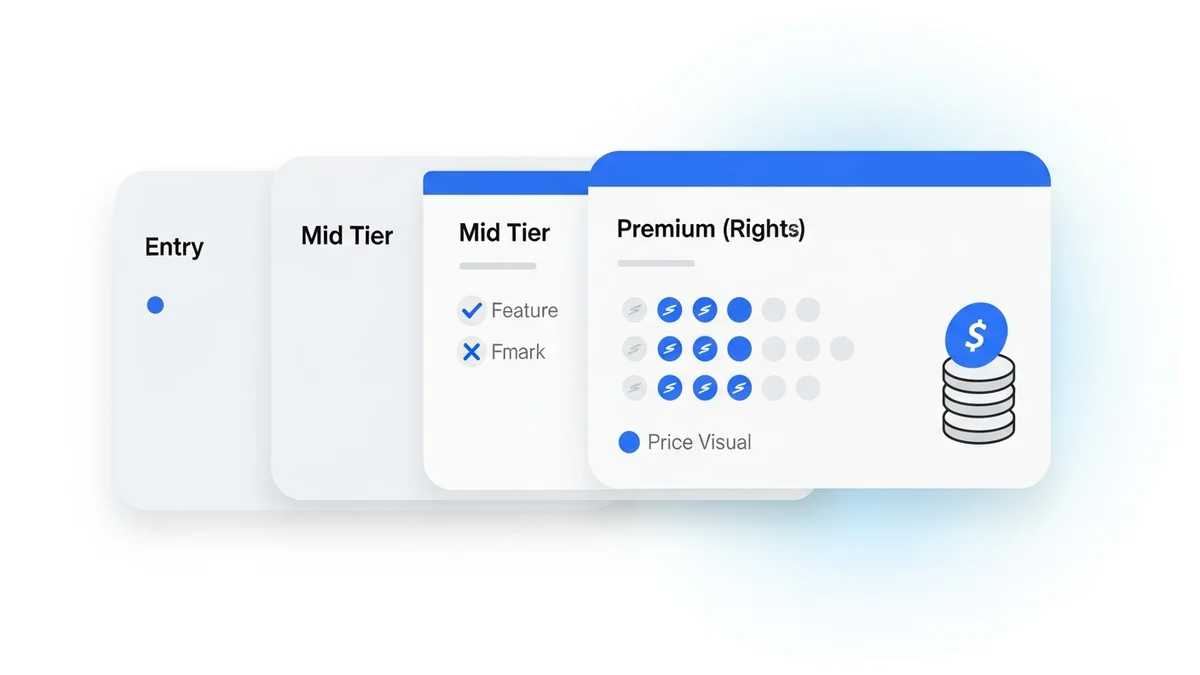
| Plan | Monthly Price | Key Limits | Right For |
|---|---|---|---|
| Free | $0 | Watermarked, limited generations | Testing only |
| Plus | $28/month | Access to Sora 2 + VEO 3.1, credit limits apply | Solo creators, small teams |
| Max | $60/month | Higher credit allocation, priority generation | Regular publishers, growing teams |
| Business | $100/month | Team seats, highest credit volume | Agencies, larger marketing teams |
The Plus plan at $28/month is the entry point that makes the Sora 2 and VEO 3.1 access economically compelling. For creators publishing 3–5 videos per week, the Max plan typically provides enough credits without overages.
Common Mistakes People Make with InVideo AI
Mistake 1: Vague Prompts
InVideo's AI handles 500+ creative decisions per video, but it needs direction. Prompts like "make a marketing video for my business" produce generic outputs. Prompts that specify tone ("professional and authoritative"), audience ("small business owners over 45"), format ("60-second explainer with three key points"), and visual style ("clean, minimal, white background") produce dramatically better first drafts. The time you save in editing is directly proportional to the specificity of your prompt.
Mistake 2: Using AI Footage for Everything
Sora 2 and VEO 3.1 footage is premium and credit-intensive. Many videos are better served by InVideo's 16M+ stock library for background and b-roll shots, reserving AI-generated footage for hero moments that require something specific. Mixing AI footage strategically extends your credits and often produces more cohesive outputs.
Mistake 3: Skipping the Studio Edit
Users who publish first-draft AI outputs without reviewing them in InVideo Studio leave quality on the table. Even a 5-minute pass to swap one or two mismatched clips and verify caption timing meaningfully improves the final product. The AI is fast — the human review step is what makes it publishable.
Mistake 4: Choosing InVideo for Precision Projects
A concrete example: a product launch video that needs to show a specific physical product, in a specific color, in a specific setting, with a specific brand voice — InVideo will frustrate you. That project needs a human editor or a more controllable tool. InVideo is for speed and volume, not surgical precision.
Final Verdict: Who Should Pay for InVideo AI
InVideo AI is worth it for:
- Content creators publishing 3+ videos per week who need a sustainable production workflow without a team.
- Marketing teams running ongoing campaigns who previously outsourced video production at $500–$2,000 per video.
- Agencies handling multiple client accounts where video production speed and volume matter more than bespoke quality.
- Anyone who needs Sora 2 or VEO 3.1 access — the $28/month InVideo Plus plan is objectively cheaper than direct access to either model ($200–$250/month standalone).
InVideo AI is not worth it for:
- Professional film or broadcast production requiring precise visual control.
- Corporate training video with specific avatar requirements — Synthesia or HeyGen are better fits.
- Projects with zero tolerance for generation failures or tight deadlines.
- Users who only need occasional one-off videos — the free plan or a per-video alternative makes more financial sense.
The platform's 4.3/5 rating reflects its genuine strengths alongside its real limitations. For the use cases it's designed for — high-volume, speed-first content creation with access to cutting-edge generation models — InVideo AI delivers exceptional value in 2026. The October 2025 model partnerships were a genuine inflection point, and the $28/month entry price for bundled Sora 2 and VEO 3.1 access is hard to argue against if you're a regular video publisher.