
Kling AI Pricing 2026: Every Plan, Credit, and Hidden Cost Explained
Kling AI has grown from a promising newcomer to a tool trusted by over 6 million creators worldwide — and its pricing has evolved to match. But the credit-based model, expiring allowances, and tiered model access make the true cost surprisingly hard to pin down. This guide breaks down every Kling AI plan for 2026, what each tier actually gets you, and whether the value holds up against rivals like Runway Gen 4.5 and Luma Dream Machine.
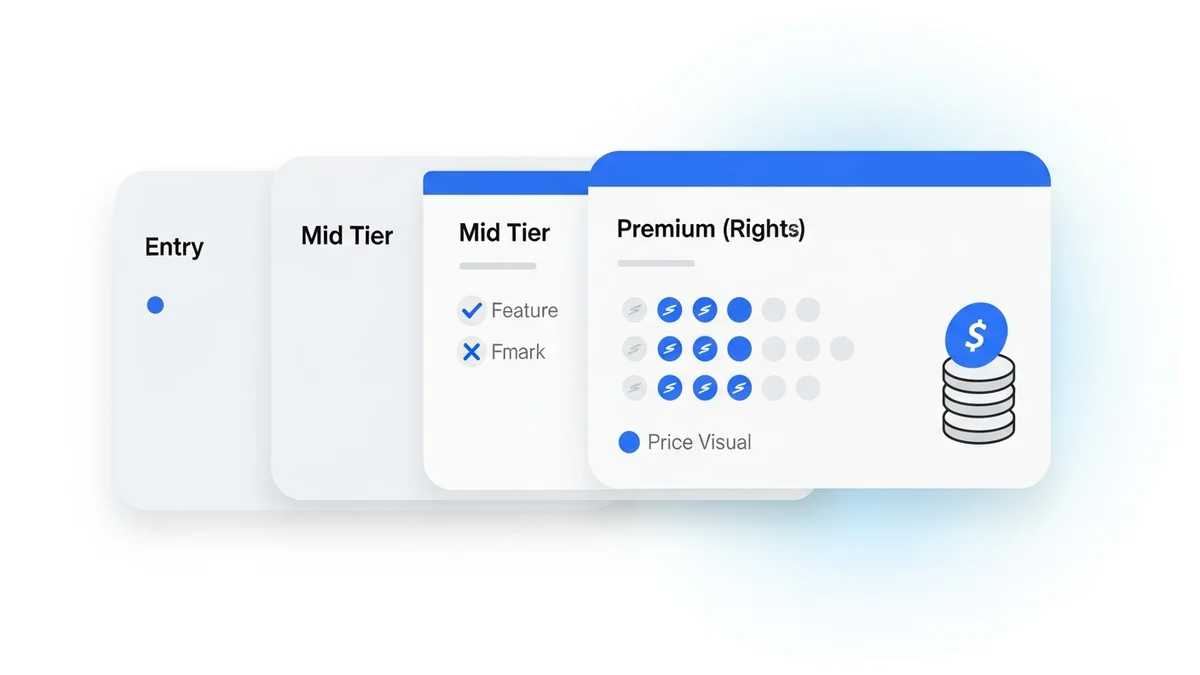
Kling AI Plan Overview: Four Tiers at a Glance
Kling AI uses a credit-based subscription model. Every video generation consumes credits, and the number of credits consumed depends on which model tier you use (Standard, Pro, or Master) and the length of the video. Paid plans start at $6.99/month on annual billing.
Free Plan — $0/month
- Approximately 166 bonus credits per day (daily top-up, not monthly rollover)
- Access to Kling 2.1 Standard model (720p output)
- 5-second and 10-second video generation
- Text-to-video and image-to-video modes
- No access to Pro or Master model tiers
- No priority queue — longer wait times during peak hours
- Watermark on exported videos
The free tier is genuinely usable for casual experimentation. Daily credits refresh every 24 hours, which means you cannot stockpile them — if you skip a day, those credits are gone.
Standard Plan — $6.99/month (annual) / $9.99/month (monthly)
- 660 monthly credits included
- Access to Kling 2.1 Standard (720p) and Kling 2.1 Pro (1080p) models
- No watermark on exports
- Priority generation queue over free users
- Text-to-video, image-to-video, and Elements (up to 4 reference images)
- Video extension feature for clips up to 3 minutes
- Credits expire at the end of each billing period — unused credits do not roll over
At this price point, Standard is aimed at individual creators publishing to social media. At roughly 35 credits per 5-second Pro-tier clip, 660 credits yields approximately 18–19 high-quality short videos per month — workable for a TikTok or Instagram workflow.
Pro Plan — $28.99/month (annual) / $35.99/month (monthly)
- 3,000 monthly credits included
- Access to all three model tiers: Kling 2.1 Standard, Pro, and Master (1080p)
- Master model includes advanced physics simulation and sound effect generation
- Professional camera controls: pan, tilt, roll, zoom, spatio-temporal sequences
- Faster generation speeds — reduced queue time compared to Standard subscribers
- Commercial usage rights included
- Access to Kling 2.5 Turbo (40% faster generation than previous versions)
- Credits still expire monthly — no rollover
The Pro plan is where Kling AI starts making sense for professional content production. With 3,000 credits monthly, a creator using the Pro model tier can generate roughly 85 five-second clips — enough for a consistent YouTube Shorts or branded content output.
Premier Plan — $69.99/month (annual) / $87.99/month (monthly)
- 8,000 monthly credits included
- All Pro plan features included
- Highest-priority generation queue
- 48 FPS output at 1080p (available on Master model)
- Access to all future model updates as they release
- Best suited for agencies, studios, or creators publishing daily
- Credits still expire monthly — no rollover
How Kling AI Credits Actually Work (And Why This Matters)
The credit system is where many users get caught off guard. Here is the exact credit cost breakdown by model and video length:
| Model Tier | Resolution | 5-Second Video | 10-Second Video |
|---|---|---|---|
| Kling 2.1 Standard | 720p | 10 credits | 20 credits |
| Kling 2.1 Pro | 1080p | 35 credits | 70 credits |
| Kling 2.1 Master | 1080p | 50 credits | 100 credits |
| Kling 2.5 Turbo | 1080p | 35 credits | 70 credits |
Video extension — which chains clips together to reach the advertised 3-minute maximum — costs the same per segment as the original generation. A 3-minute Master-tier video built from 10-second segments requires 18 extensions, consuming 1,800 credits. On the Pro plan, that is more than half your monthly allowance for a single video.
Newsletter
Get the latest SaaS reviews in your inbox
By subscribing, you agree to receive email updates. Unsubscribe any time. Privacy policy.
Hidden Costs and Gotchas
Expiring Credits
This is Kling AI's most significant financial risk for paying subscribers. Credits do not roll over. If you buy the Pro plan, generate 500 credits worth of content, and then get busy for two weeks, you lose the remaining 2,500 credits at the end of the month. There is no option to pause a subscription or bank unused credits.
No Refunds for Failed Generations
When a generation fails — and failures do occur, particularly during high-traffic periods — credits are still consumed and not refunded. The platform's customer support is widely described as difficult to reach, meaning disputes over failed credits rarely resolve in the user's favor.
API Access Costs Separately
Developers integrating Kling AI via API pay separately from the subscription tiers above. API pricing is consumption-based and significantly higher per video than the subscription credit rate. For any automated pipeline or product build, the effective per-video cost can be 3–5x the subscription equivalent.
Credit Top-Ups
Additional credits can be purchased outside your monthly allowance. Top-up packs typically run at a higher per-credit rate than what you get in your subscription, making it cost-inefficient to regularly exceed your plan limits. If you consistently need more than your plan provides, upgrading tiers is almost always cheaper than buying top-ups.
Kling AI vs Competitors: Pricing Comparison Table
How does Kling AI stack up against other leading AI video generators? Here is a direct comparison of entry-level and mid-tier paid plans in 2026:
| Tool | Entry Plan (Monthly Billing) | Entry Plan (Annual Billing) | Mid Plan (Monthly) | Max Resolution | Free Tier |
|---|---|---|---|---|---|
| Kling AI | $9.99/month | $6.99/month | $35.99/month | 1080p / 48FPS | Yes (daily credits) |
| Runway Gen 4.5 | $15/month | $12/month | $35/month | 1080p | Yes (limited) |
| Pika Labs | $8/month | $8/month | $28/month | 1080p | Yes (limited) |
| Luma Dream Machine | $29.99/month | $23.99/month | $79.99/month | 4K | Yes (5 generations) |
| Sora 2 | $20/month (ChatGPT Plus) | $20/month | $200/month (ChatGPT Pro) | 1080p | No |
Kling AI wins on entry-level pricing — $6.99/month annual is the cheapest paid entry point among major AI video tools. The trade-off is the credit expiry policy and the lack of customer support infrastructure, which competing platforms handle better. Google Veo 3.1 sits in an enterprise bracket not represented above, typically $500+/month for API-level access.
Who Each Plan Is Best For
Free Plan: Hobbyists and First-Time Explorers
If you want to test whether AI video generation fits your workflow before spending money, Kling's free tier is one of the most generous in the industry. Daily credit refreshes mean you can experiment regularly without any financial commitment. The 720p cap and watermark limit commercial use, but for personal projects, learning the platform, or creating content for personal social accounts, the free plan is entirely functional.
Standard Plan ($6.99/month annual): Solo Social Media Creators
The Standard plan suits creators publishing 4–8 short videos per week to TikTok, Instagram Reels, or YouTube Shorts. At $6.99/month, it is cheaper than most premium Canva or Adobe subscriptions. Best use case: a lifestyle content creator who needs 15–20 polished short clips monthly, uses 1080p Pro-tier for hero content, and drops to Standard-tier for B-roll and filler clips to stretch the credit budget.
Pro Plan ($28.99/month annual): Marketing Teams and Frequent Creators
With 3,000 monthly credits and access to the Master model tier (including physics simulation and sound effects), the Pro plan is designed for small marketing teams producing branded video content, product demos, or social campaigns. A DTC brand running weekly video ads benefits directly from the Elements feature — the ability to feed 4 reference images for character consistency solves one of the biggest headaches in AI video for commercial use. Compare this with tools like HeyGen or Synthesia if your primary need is avatar-based spokesperson video, as those platforms are more purpose-built for that specific workflow.
Premier Plan ($69.99/month annual): Agencies and High-Volume Studios
The Premier plan makes financial sense once you are generating content daily or managing video production for multiple clients. At 8,000 credits per month and 48 FPS 1080p output, this tier produces content that can pass as studio-grade in many contexts. Agencies running paid social campaigns for multiple brands, or video production studios using Kling as a pre-visualization or motion graphics layer, will find the credit volume justifies the price. The highest-priority queue is also important here — Premier subscribers experience noticeably shorter wait times during peak hours.
Money-Saving Tips for Kling AI in 2026
1. Always Use Annual Billing
The gap between monthly and annual pricing on Kling AI is significant. The Standard plan drops from $9.99 to $6.99/month on annual — a 30% saving. The Pro plan drops from $35.99 to $28.99 — saving $84 per year. If you commit to Kling AI for more than 4–5 months, annual billing always wins.
2. Draft with Standard, Publish with Pro
Use Kling 2.1 Standard (10 credits per 5-second clip) for iterating on prompts and testing compositions. Only switch to Pro or Master tier (35–50 credits) for final renders. This approach can cut your credit consumption by 60–70% on a typical production workflow.
3. Set a Monthly Credit Budget Calendar
Because credits expire at month-end, map out your production schedule at the start of each billing period. Cluster high-volume work in the first three weeks and use the final week for top-priority final renders. This prevents the all-too-common scenario of 800 unused credits evaporating on day 30.
4. Use Video Extension Sparingly
Extended videos (up to 3 minutes) are one of Kling's headline features, but each extension segment costs the same as a new generation. For content that genuinely needs length, extension makes sense. For most social media content, a single 5–10 second clip is more effective — and far cheaper — than a chained multi-segment video.
5. Match the Plan to Your Publishing Frequency
Before upgrading from Standard to Pro, calculate your actual monthly video output. If you publish 20 videos per month, the Standard plan's 660 credits cover approximately 18 Pro-tier clips or 66 Standard-tier clips. If you are regularly hitting that ceiling, upgrade. If you are not, stay on Standard and bank the $22/month difference.
6. Compare Against Specialized Alternatives
Kling AI is a generalist video generator — strong across text-to-video, image-to-video, and cinematic camera work. But if your primary use case is avatar-driven marketing video, dedicated tools like D-ID may offer better per-video economics. Running a quick cost-per-output comparison before committing to an annual subscription is always worth the 30 minutes.
Bottom Line: Is Kling AI Worth the Price in 2026?
At $6.99/month for the Standard annual plan, Kling AI is one of the most accessible professional AI video tools available. The quality ceiling — 1080p at 48 FPS with physics-accurate motion and multi-reference character consistency — is genuinely competitive with tools that cost three to five times as much.
The credit expiry policy is a real financial risk, not a minor inconvenience. If your production schedule is inconsistent, you will regularly lose paid credits. The absence of customer support and the no-refund policy for failed generations mean you are accepting meaningful uncertainty when paying for Premier-tier volume. For individual creators and small teams with predictable workflows, the value is strong. For agencies or production studios where reliability and support escalation paths matter, weigh those limitations carefully before committing to annual billing at the top tier.