
What Is Vizard AI and Why It Dominates the Video Repurposing Space
Vizard AI has carved out a specific and highly valuable niche in the AI video landscape: it does not generate video from scratch like Runway Gen 4.5 or Google Veo 3.1, but instead takes your existing long-form video content and transforms it into short, platform-optimized clips at scale. For content teams, podcasters, agencies, and social media marketers, this distinction matters enormously.
In 2025, short-form video continues to be the highest-engagement content format across every major social platform. The problem most creators face is not a shortage of content — they have hours of webinars, podcast recordings, live streams, and interviews sitting unused. Vizard solves the distribution bottleneck by using AI to identify the most compelling moments in long recordings and automatically clip, caption, and resize them for TikTok, YouTube Shorts, Instagram Reels, Twitter, Facebook, and LinkedIn.
The platform has expanded considerably beyond simple clipping. As of 2025, Vizard includes AdMaker for paid ad creation, Spark 1.0 (their proprietary AI model), an API for teams building programmatic workflows, and a full suite of subtitle and transcription tools. It positions itself as a team-scale video production platform, not just a hobbyist editor.
Core Vizard AI Features Breakdown
AI-Powered Auto Clip Generation
The flagship feature is Vizard's automatic video editor, which analyzes audio and visual content to detect high-value segments. The AI scores sections based on speech clarity, topic coherence, and engagement signals, then surfaces the top clips ranked by predicted performance. For a 60-minute podcast episode, Vizard can generate 10–20 candidate clips in minutes, each trimmed to 30–90 seconds.
The clip maker handles aspect ratio conversion automatically. A 16:9 landscape recording becomes a 9:16 vertical clip with smart cropping that follows the speaker's face — a critical feature for short-form platforms that penalize letterboxed content.
Subtitle and Caption Engine
Vizard's auto subtitle generator supports over 35 languages with high transcription accuracy. The subtitle editor allows word-level timing corrections, font customization, color styling, and animated caption styles (word-by-word pop-in, karaoke-style highlighting). This matters because subtitles are not optional for short-form content — studies consistently show 85% of social video is watched without sound, and captioned videos see significantly higher completion rates.
The video translator extends this further, enabling creators to auto-translate captions into multiple languages and publish the same clip across international audiences without manual localization work.
Video-to-Text and Podcast Transcription
The transcription suite produces structured text from video, useful for repurposing video content into blog posts, show notes, and newsletters. Podcast transcription specifically handles multi-speaker detection, labeling each speaker separately — a common pain point with generic transcription services that produce undifferentiated walls of text.
The AI podcast clip generator takes this further by reading the transcript and identifying quotable soundbites, controversial statements, and story-driven moments that perform well as standalone clips, even without watching the full video.
AdMaker and Performance Marketing Tools
AdMaker is Vizard's dedicated module for performance marketers. It structures video content into ad-ready formats with hooks in the first 3 seconds, clear CTAs, and optimal durations for paid placements on Meta, TikTok Ads, and YouTube Ads. This separates Vizard from general-purpose editors like Pictory, which focuses more on explainer-style content creation rather than direct-response ad production.
Spark 1.0 — Vizard's Proprietary AI Model
Vizard's Spark 1.0 model powers the intelligent clip scoring and content analysis engine. Unlike basic cut-detection algorithms that only identify scene changes, Spark analyzes speech semantics, pacing, and structural signals (introductions, key points, conclusions) to rank clip quality. The model is trained specifically on social media engagement patterns rather than general video data, which improves the relevance of its clip selections for distribution use cases.
Vizard AI Pricing and Plans
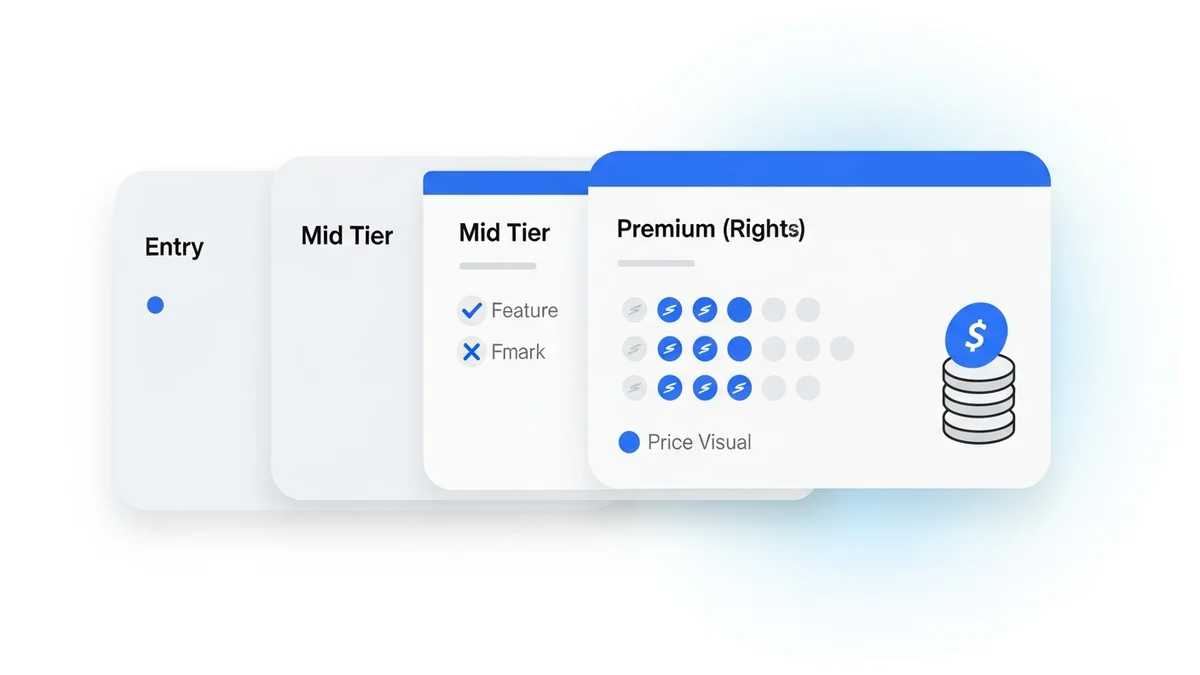
| Plan | Price | Monthly Upload Hours | Exports per Month | Key Features |
|---|---|---|---|---|
| Free | $0/month | Up to 1 hour | 10 clips | Auto clipping, basic subtitles, 720p export |
| Pro | ~$16/month (billed annually) | Up to 10 hours | Unlimited | 1080p export, custom fonts, translator, subtitle styles |
| Business | ~$39/month (billed annually) | Up to 40 hours | Unlimited | Team collaboration, brand kits, priority processing, API access |
| Enterprise | Typically $500+/month | Custom | Custom | Dedicated support, custom integrations, SLA, white-label options |
Newsletter
Get the latest SaaS reviews in your inbox
By subscribing, you agree to receive email updates. Unsubscribe any time. Privacy policy.
The Pro plan at ~$16/month is the practical entry point for individual creators and small teams. The free tier is useful for evaluating clip quality before committing, but the 10-clip export cap makes it unsuitable for regular production use.
Who Should Use Vizard AI
Podcasters and Long-Form Content Creators
If you record 45–90 minute episodes and currently spend 2–3 hours manually cutting clips for social promotion, Vizard eliminates most of that labor. Upload the full episode, review the AI-suggested clips, make minor adjustments in the subtitle editor, and export. A realistic workflow drops from 3 hours to 20–30 minutes per episode.
Social Media Marketing Teams
Teams managing multiple brand accounts benefit most from the Business plan's collaboration features and brand kit functionality. One editor can set up templates — fonts, colors, logo placement, caption styles — and the entire team produces on-brand clips without inconsistency. The platform explicitly targets social media marketers, content marketers, performance marketers, and event marketers as distinct use cases with separate workflow guidance.
Agencies
Vizard's agency positioning allows white-label-style output and bulk processing. An agency producing weekly video content for 10 clients can centralize production in one Vizard workspace, process recordings in parallel, and deliver platform-specific clips for each client without switching between tools. For agencies comparing this to avatar-based video tools like HeyGen or Synthesia, the key distinction is source material: Vizard requires real recorded footage, while HeyGen and Synthesia generate new video from text scripts.
Event Marketers
Post-event video repurposing is one of Vizard's clearest ROI use cases. A full-day conference produces 6–8 hours of recorded sessions. Vizard can process each session and extract speaker highlights, audience reaction moments, and key announcements — turning a single event investment into months of social content.
Vizard vs. Competing Tools
| Tool | Primary Use Case | Starting Price | Best For | Weakness vs. Vizard |
|---|---|---|---|---|
| Vizard AI | Auto-clip existing long-form video | $0 (Free), ~$16/mo Pro | Repurposing podcasts, webinars, streams | — |
| Pictory | Text-to-video, script-based creation | ~$23/month | Blog-to-video, explainer videos | No smart clip detection from existing footage |
| Descript | Text-based video editing | ~$24/month | Podcast editing, screen recording | No automated clip generation for social |
| Luma Dream Machine | AI video generation from prompts | ~$29.99/month | Creative generative video | Does not process existing footage |
| Pika Labs | Generative video creation | ~$8/month | Short creative clips from text/image | Not a repurposing tool |
The comparison above highlights that Vizard occupies a distinct category from generative tools like Luma Dream Machine or Pika Labs. Those tools create video from nothing; Vizard maximizes the value of video you already have. Depending on your workflow, you may need both — generative tools for campaign visuals and Vizard for distributing recorded content.
Common Mistakes When Using Vizard AI
Mistake 1: Accepting Every AI-Suggested Clip Without Review
Vizard's AI is strong but not perfect. A common error is treating the auto-generated clip list as final output and exporting everything without review. In practice, some AI-selected clips will start mid-sentence or end before the punchline lands. The correct workflow is to review each clip in the editor, adjust trim points by 1–3 seconds at the start and end, and verify the subtitle accuracy before export. Allocate 5–10 minutes of review per clip for anything going directly to a brand channel.
Mistake 2: Ignoring the Subtitle Editor After Auto-Generation
Auto-transcription accuracy is high but not 100%. Industry terms, proper nouns, and accented speakers frequently generate errors. A clip with a subtitle error like "our revenue grew 40%" displayed as "our revenue grew 14%" is not just cosmetic — it actively damages credibility. Always run a subtitle accuracy check before publishing, particularly for technical, financial, or medical content.
Mistake 3: Using the Same Aspect Ratio for All Platforms
Vizard supports 16:9, 9:16, 1:1, and 4:5 aspect ratios. A common mistake is exporting only 9:16 vertical clips because TikTok and Reels are dominant, then posting those same clips to LinkedIn and Twitter where square (1:1) or landscape (16:9) formats perform significantly better. The platform's resize feature makes multi-format export trivial — there is no production reason to skip this step.
Mistake 4: Not Setting Up Brand Kits Before Production Starts
Teams on the Business plan often begin producing clips before configuring brand kits, then spend hours retroactively fixing font colors, logo placement, and caption styles across existing exports. Set up your brand kit — primary colors, logo file, approved fonts, caption animation style — before processing the first video. Every clip exported afterward inherits those settings automatically.
Mistake 5: Uploading Poor-Quality Source Audio
Vizard's transcription and AI clip scoring both depend on audio quality. Recordings with significant background noise, echo, or inconsistent volume levels produce lower-quality transcriptions and weaker clip detection scores. Before uploading, run source audio through a noise reduction tool. The difference in output quality between clean and noisy audio is dramatic — a 30-minute clean podcast will generate better clips than a 2-hour recording with poor room acoustics.
Vizard AI API and Team Workflows
For teams processing high volumes of content — more than 10–15 videos per week — Vizard's API enables programmatic integration. Common patterns include automatically uploading recordings from a cloud storage bucket after a live stream ends, triggering clip generation, and distributing approved clips to a scheduling tool like Buffer or Hootsuite without any manual steps.
This positions Vizard as infrastructure rather than just a tool. Teams building content operations at scale (media companies, large creator networks, enterprise marketing departments) can integrate Vizard into existing pipelines rather than treating it as a standalone application requiring manual uploads.
Final Verdict: Is Vizard AI Worth It in 2025
For any creator or team sitting on a backlog of long-form video content, Vizard AI delivers clear, measurable value. The Pro plan at ~$16/month pays for itself if it saves even 2–3 hours of manual editing per month — which it will for most users running a podcast, webinar series, or regular live stream.
Vizard is not a replacement for generative video tools. It does not compete with Kling AI for creative video generation or with avatar tools for scripted content production. Its value proposition is entirely about efficiency: taking content you already created and making it reach audiences on every platform, in the right format, with minimal manual effort.
For teams with higher production volume, the Business plan's collaboration features and brand kit system make it the stronger choice. For individual creators, Pro is the right tier. Start with the free plan to validate that the AI clip quality meets your standards on your specific content type, then upgrade once you confirm it fits your workflow.